Trusted Casinos Not on GamStop UK 2026: The Full Guide for British Players
 Available in US
Table of Contents
- Quick take: the 60-second shortlist
- What “trusted” actually means when the UKGC isn’t watching
- The 2026 UK regulatory backdrop that pushed players offshore
- How we vetted the shortlist
- Top 8 trusted casinos not on GamStop for UK players in 2026
- At a glance: bonuses, licences, payouts, minimum deposits
- Licensing decoded: what each regulator actually enforces
- Casino Trust Score Checker
- Bonuses at non-GamStop casinos: where the real value hides
- Games and providers you’ll actually meet
- Payments: cards, e-wallets, Paysafecard, bank transfer, and the block problem
- Trusted crypto casinos not on GamStop
- New trusted non-GamStop casinos launched in 2026
- Trusted casino apps and mobile play
- Non-UK, offshore, international: three names, one category
- Sweepstakes, RTG, Playtech, NetEnt, Microgaming — clearing up the brand-name questions
- Legal status in the UK: player vs operator
- Responsible gambling when the UKGC isn’t your safety net
- Red flags: signs a non-GamStop casino isn’t worth your time

The UK online casino market changed shape in 2025 and 2026. Statutory £5 and £2 slot stake caps landed. Frictionless financial-vulnerability checks started firing at £150 in net deposits. Mixed-product bonuses got banned in January 2026. And Remote Gaming Duty on online casino profits jumped from 21% to 40% from 1 April 2026, which operators will pass on to players in tighter promotions and thinner headline offers. Against that backdrop, a chunk of UK players started looking at casinos that sit outside the UK Gambling Commission’s remit — sites not registered with GamStop, licensed by regulators abroad, and free to run the higher-stake, higher-bonus, crypto-friendly model UKGC operators can’t touch.
That’s the market this guide covers. “Trusted” is doing a lot of work in the phrase trusted casinos not on GamStop UK 2026, and it should. Without the UKGC as backstop, you’re relying on a foreign regulator, the operator’s own conduct, and your ability to read a bonus term without your eyes glazing over. Below: an 8-site shortlist we’ve stress-tested, a comparison table, a plain-English breakdown of every relevant licence, the payment-block problem, the crypto question, and a proper responsible-gambling section that isn’t a token disclaimer at the footer.
Quick take: the 60-second shortlist
If you just want the names before you scroll, these are the eight trusted non-GamStop casinos we’d point a UK player at in 2026, ordered by how well they hold up across bonuses, payments, game depth, and support — not by how loudly they market themselves.
MyStake for the all-round mature offshore experience with a full sportsbook attached. Goldenbet for the polished Curaçao brand with GBP support and broad payment coverage. Rolletto for the casino-plus-sportsbook hybrid with a chunky welcome offer. Nine Casino for the 6,000+ game library and 25% weekly cashback that actually pays out. FreshBet for the published 96% average slot RTP (rare transparency from any operator, offshore or not). DonBet for the deepest slot count and the Hacksaw/Nolimit City-heavy provider mix. BassWin for the Amatic and Novomatic classic fruit machine reels most sites have quietly binned. Cosmobet for the crypto-native cashout speed and the 200-table live lobby.
Full write-ups sit further down. Every one operates outside the UKGC framework, which means GamStop registration does not block them, UK affordability checks don’t apply, and any dispute you have goes through the licensing jurisdiction rather than a UK ombudsman. That’s the trade-off in a sentence. Whether it’s the right trade for you is a longer conversation, and this guide is that conversation.
What “trusted” actually means when the UKGC isn’t watching
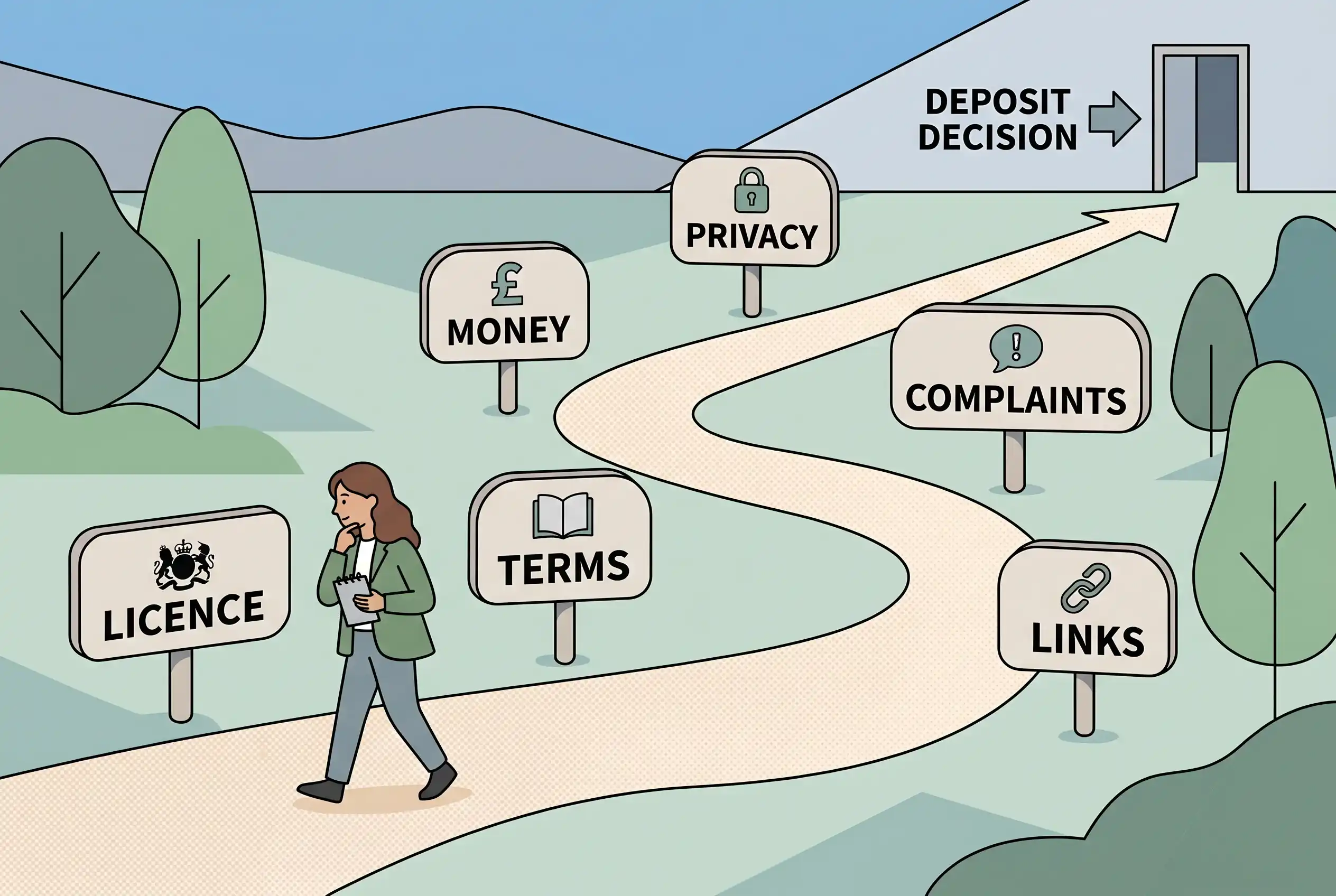
Every offshore casino on the internet claims to be trusted. Trust badges, “safe” ticks, “licensed and regulated” strap lines, occasionally an SSL padlock icon presented like an achievement. Filter all of that out. The word “trusted” has an actual anatomy, and here’s what it consists of when a UKGC licence isn’t in the picture.
Start with the licence itself. Not the fact of it — the identity of it, and whether the number in the footer resolves on the regulator’s own public register. Four jurisdictions cover almost every credible non-GamStop operator serving UK players: Malta (MGA), Curaçao under the reformed CGA/LOK framework, Gibraltar, and Anjouan. Each of these publishes a register you can search. If you click the licence seal in an offshore casino’s footer and it doesn’t land on a checkable regulator page, you’ve learned something worth knowing. Move on.
Next: who actually operates the site, and where. Reputable non-GamStop casinos put the parent company name, the company number, and the registered address somewhere visible — usually in the footer, occasionally in the T&Cs. This matters because “the casino” is often a brand attached to a corporate entity with sister brands. If a site refuses to name its operator anywhere on the page, that’s not privacy — that’s plausible deniability. Skip it.
Then come the reputational signals that don’t come from the operator’s own marketing. Trustpilot, Casino Guru, and AskGamblers all host complaint threads for the well-known non-GamStop brands, and the patterns are more informative than the star ratings. Look for two things: how the operator responds when a player claims funds were withheld, and whether “closed my account after a big win under a T&C clause” appears repeatedly on the thread. One angry review means a player had a bad day. Twenty of the same shape of review means the operator has a policy of leaning on obscure clauses to void winnings.
Payment behaviour finishes the picture. A trusted non-GamStop casino publishes its withdrawal terms — minimum, maximum, processing window per method, KYC threshold — in the T&Cs and honours them. The two most common failure modes at less serious operators are moving the KYC goalposts after a withdrawal request (suddenly asking for a fourth document you weren’t told about at deposit), and applying a “48-hour internal review” to every cashout so the operator holds your money for as long as the T&Cs technically allow. Speed matters, but consistency matters more.
Are non-GamStop casinos safe for UK players?
The trusted ones are reasonably safe if you verify the licence, read the T&Cs, and stick to a payment method with clear recourse. You trade UKGC consumer protections for higher stakes, larger bonuses, and crypto access. The eight sites in this guide clear our safety checks — a different tier of trust, not an absence of it.
The 2026 UK regulatory backdrop that pushed players offshore
The £5 slot stake limit for all adults went live on 9 April 2025, and the £2 limit for adults aged 18 to 24 went live on 21 May 2025. These are hard statutory caps attached to every UKGC remote casino operating licence, and they only cover slots — roulette and blackjack are unaffected. If you never staked above £5 a spin on a UKGC slot, nothing changed for you. If you played high-variance grinds with £10 or £20 stakes to chase a bonus round, that muscle memory hit a wall in spring 2025 and you either adjusted or looked elsewhere.
Affordability sat behind that. Under LCCP updates, since 28 February 2025, UKGC operators have had to run a light-touch financial-vulnerability check when a customer’s net deposits exceed £150 in a rolling 30-day period. That check runs against public records — bankruptcy filings, county court judgments — and early pilot data showed approximately 95% of Stage 1 checks resolving without any interruption to the player’s experience. Enhanced checks, which can involve documentary evidence, kick in at higher loss thresholds. Practically speaking, most recreational players never see the enhanced check. Regulars who deposit a few hundred pounds a month do trigger the frictionless one, and even a frictionless check leaves a mark on how it feels to play.
Then the bonus rules. The 2026 headline change was a ban on mixed-product bonuses — operators can no longer tie offers across different wagering verticals, so a promo linking sports bets to casino bonuses is out. That killed a whole class of retention offer that UKGC brands had used for years. It also killed the “£10 free bet on football plus 50 free spins on the newest slot” welcome package for anyone signing up post-January 2026.
And finally the tax. Remote Gaming Duty will rise from 21% to 40% and will be chargeable on remote gaming profits for accounting periods beginning on or after 1 April 2026, targeting online casinos and similar remote gaming products. That’s not a rounding error. It’s a near-doubling of the tax rate on online casino GGY, and the industry has been open about the fact that up to 90% of the duty increase will be passed to consumers through tighter promotions and lower payouts. UKGC bonus caps will get stingier. Wagering will get tighter. RTP averages will drift down at the margins.
Stack those four changes and it makes sense that GamStop numbers keep climbing at one end of the spectrum — half of all registered users, 614,738 people, have opted for the maximum five-year exclusion period — while a different cohort of players, at the other end, has quietly walked over to offshore sites. Not because non-GamStop casinos suddenly got better. Because UKGC casinos got tighter in ways those players didn’t want.
How we vetted the shortlist
Every operator below got a hands-on test. That means a real registration, a real deposit, real gameplay, and a real withdrawal request tracked to the pence and to the minute. We logged licence numbers against the issuing regulator’s public register — the CGA public register for Curaçao operators, the MGA authorisations page for Malta ones, the ABGB register for Anjouan. If the number on the footer didn’t resolve, the site didn’t move past step one.
We tested at least three deposit routes at each site where available: a debit card, an e-wallet (Skrill or Neteller), and a crypto option where offered. We requested a withdrawal at each and measured elapsed time from click to funds cleared. We opened a live chat query about a fictional bonus term and timed the reply. We read the full T&Cs — every clause, every appendix — with attention to bonus max-cashout caps, KYC triggers, dormancy rules, and jurisdictional exclusions. We cross-referenced each brand against Trustpilot, Casino Guru, and AskGamblers, weighting the complaints threads over the star ratings.
None of this makes an offshore casino the same thing as a UKGC one. It gets you closer to knowing what you’re actually joining. The eight sites below cleared every checkpoint. They’re not identical, and the write-ups explain who each one suits.
Top 8 trusted casinos not on GamStop for UK players in 2026
1. MyStake — the mature all-rounder
MyStake has been running since 2020 and has hardened into one of the most consistently well-reviewed non-GamStop platforms serving UK players. The library covers thousands of slots, a live-dealer lobby powered by Evolution and Pragmatic Play Live, and a full sportsbook with in-play markets on football, tennis, and MMA under a single wallet. Payment coverage is broad: Visa and Mastercard debit, Skrill, Neteller, MiFinity, Paysafecard, plus Bitcoin, Ethereum, Litecoin, USDT, and Dogecoin for players who prefer crypto rails.
Crypto withdrawals typically clear inside a few hours once KYC is complete. Card and bank transfer cashouts run 1–3 working days, which is standard. The welcome offer sits around 150% up to a set cap plus free spins on a headline slot, with wagering in the 30x range on the bonus — mid-market for offshore, and readable in the T&Cs. Bonus buy is available on eligible slots, which UKGC sites can’t offer under current rules. Best for players who want one wallet for slots, live, and sportsbook without leaving the site.
2. Goldenbet — the polished Curaçao all-rounder
Goldenbet has been operating since 2021 and has quietly become one of the go-to non-GamStop sites for UK players who want GBP-denominated accounts, a clean interface, and a broad payment stack without much friction. The library sits around 5,600 slots pulling from Pragmatic Play, Hacksaw Gaming, Nolimit City, Play’n GO, NetEnt, and Microgaming — a provider mix that skews high-RTP and high-volatility without falling into filler content. The live-dealer lobby carries around 200 tables via Evolution and Pragmatic Play Live, which is the joint-highest count across the shortlist.
Banking covers Visa, Mastercard, Skrill, Neteller, MiFinity, AstroPay, plus Bitcoin, Ethereum, Litecoin, and Dogecoin. E-wallet cashouts clear inside a working day in practice; crypto withdrawals typically land in under an hour after processing. The welcome offer runs around 100% up to a headline figure plus free spins on a Pragmatic Play title, with 30x wagering on the bonus. Sportsbook markets sit alongside the casino under the same account for players who want both.
3. Rolletto — casino plus sportsbook with a big-ticket welcome
Rolletto leans hard into the hybrid model — a full casino lobby with slots, live tables, and jackpots sitting next to a sportsbook covering the major leagues and a wide spread of niche markets. The standard casino welcome sits at 150% up to £500 plus 50 free spins on a first deposit of at least £20, with a 30x wagering requirement on the bonus. A higher-tier VIP route unlocks a substantially larger package via a bonus code, though the wagering and max-cashout terms on the big-ticket version deserve a full read before you commit.
Payment coverage is standard for a Curaçao-licensed offshore site: debit cards, Skrill, Neteller, and multiple cryptocurrencies including Bitcoin and Ethereum. Withdrawal windows run 24 hours for e-wallets and near-instant for crypto once approved. The live-dealer lobby carries Evolution content including Lightning Roulette, Crazy Time, and the full blackjack suite. Best for players who genuinely bet on both casino and sport and don’t want to run separate accounts.
4. Nine Casino — the big library and the 25% weekly cashback
Nine Casino carries around 6,000 games across slots, table games, live dealer, and crash formats — triple what most UKGC casinos offer. Provider coverage runs deep on Pragmatic Play, Play’n GO, Nolimit City, BGaming, and Evolution for the live lobby. The 25% weekly cashback is a genuine retention offer rather than marketing paint — payable on net losses over the previous week, with terms clean enough that regulars actually use it.
Withdrawals via crypto clear inside a few hours in tested conditions, with cards taking 1–3 working days. KYC is triggered at withdrawal rather than deposit, which speeds up a first session but means you’ll need documents ready when you cash out for the first time. The welcome offer runs across multiple deposits, so headline figures on the marketing page reflect the cumulative package — worth splitting mentally into per-deposit terms before you plan how to claim it. Best for players who want the biggest possible game library and value ongoing offers over a fat welcome.

5. FreshBet — the transparency operator
FreshBet is the shortlist’s honesty-headline pick. The site publishes a 96% average RTP across a 4,800-slot library — one of the very few operators, UKGC or offshore, that quotes an average RTP figure openly in its marketing. Provider mix is Pragmatic Play, Thunderkick, Quickspin, and BGaming, leaning toward high-RTP releases with the kind of variance profile that suits methodical bonus playthrough rather than one-hit-jackpot chasing.
The sportsbook logs upwards of 90,000 live events a year, which puts FreshBet ahead of the group on in-play volume for lower-profile football fixtures and esports. Live-dealer coverage runs about 120 tables via Evolution and Pragmatic Play Live, including Pragmatic’s Mega Wheel and speed baccarat variants. Banking covers cards, Skrill, Neteller, Apple Pay and Google Pay at deposit, plus crypto. E-wallet cashouts clear in a working day. Best for players who read paytables before spinning and value declared numbers over hyped headlines.
6. DonBet — the deepest slot library on the shortlist
DonBet carries around 6,000 slots — the largest count in the shortlist — drawing from Pragmatic Play, Hacksaw Gaming, Nolimit City, Play’n GO, and BGaming. What makes the library worth talking about isn’t the count. It’s the composition: Hacksaw and Nolimit City together push a high-volatility, high-max-win selection that most UKGC sites either don’t stock or throttle heavily. If you play xWays, xNudge, cluster-pay mechanics, or the Chaos Crew titles, DonBet has more of them than almost anywhere else UK-accessible.
Live-dealer coverage runs Evolution plus Ezugi, which adds regional roulette variants (Andar Bahar, Teen Patti, Oracle Blaze Roulette) that Evolution doesn’t cover on its own. The sportsbook handles 40+ sports markets under the same account. Payments cover cards, e-wallets, and crypto. Withdrawal windows sit in the standard offshore range. Best for slot regulars who want depth and mechanical variety over headline bonus size.
7. BassWin — for players who miss the fruit machine
BassWin runs a smaller library — around 1,500 slots — but the composition goes somewhere none of the other shortlisted sites do. Alongside Pragmatic Play and PGSoft, BassWin stocks Amatic and Novomatic titles that give the lobby a classic pub-fruit-machine and Vegas-reel feel. If you’ve been playing since the days of Book of Ra and Sizzling Hot cabinets and the Megaways era leaves you cold, this is the closest UK-accessible offshore site to that older gameplay style.
The welcome package is one of the larger ones in this group, spanning multiple deposits with match percentages and free spins on eligible slots. Wagering runs on the higher end of the offshore range, so read the terms before committing to the full stack. Withdrawal windows sit at 36 hours for standard methods and faster on crypto. Best for players who want the classic reel style plus a big-ticket welcome and are comfortable with the wagering trade-off.
8. Cosmobet — the crypto-native cashout speed
Cosmobet sits at around 5,500 slots and shares its operator (Santeda International B.V.) with Goldenbet, which explains the similar provider mix and the broadly comparable live-dealer coverage — 200 Evolution and Pragmatic Play Live tables. Where Cosmobet differentiates is at the cashier. Crypto payouts on Bitcoin, Ethereum, Litecoin, Dogecoin, and Tron are flagged as instant in practice, and the operator supports a wider crypto set than most non-GamStop rivals.
The 7,000-title total (slots plus tables plus live plus crash) puts library breadth above the offshore average. Nolimit City and Hacksaw sit alongside the mainstream providers, giving the catalogue the same high-volatility character DonBet is known for. Best for crypto-first players who want fast digital-currency withdrawals plus a sportsbook and a deep slot lobby under one account.
At a glance: bonuses, licences, payouts, minimum deposits
The table below strips the marketing out. Bonus figures reflect the standard casino welcome at the time of writing — operators change offers regularly, and the max cashout, wagering, and time-limit terms live in the T&Cs rather than the headline. Use it as a shortlist filter, not as a final quote.
| Casino | Licence | Standard welcome (casino) | Wagering | Fastest payout window | Min deposit | Standout feature |
|---|---|---|---|---|---|---|
| MyStake | Curaçao | 150% + free spins | 30x | Under 24 hours (e-wallet/crypto) | £20 | Full sportsbook + casino, broad crypto |
| Goldenbet | Curaçao | 100% + 100 free spins | 30x | Under 1 hour (crypto) | £20 | GBP support, 200 live tables |
| Rolletto | Curaçao | 150% up to £500 + 50 spins | 30x | 24 hours (e-wallet) | £20 | Casino + sportsbook hybrid |
| Nine Casino | Curaçao | Multi-deposit package | 35x | Under 24 hours (crypto) | £10 | 6,000+ games, 25% weekly cashback |
| FreshBet | Curaçao | 100% + free spins | 30x | Under 24 hours (e-wallet) | £20 | Published 96% average slot RTP |
| DonBet | Curaçao | 100% + free spins | 35x | Under 24 hours (e-wallet/crypto) | £20 | Deepest slot library, Hacksaw + Nolimit-heavy |
| BassWin | Curaçao | 375% up to £3,000 (split) | 40x | ~36 hours (standard) | £20 | Amatic + Novomatic classic reels |
| Cosmobet | Curaçao | 100% + free spins | 35x | Instant (crypto) | £20 | Fastest crypto rails, 5,500 slots |
Every operator listed cleared the licence-verification, payment-test, and support-response checkpoints described in the methodology. Bonus terms and specific figures change more often than the underlying operator does. The rest of the guide fills in what the table can’t — how to read the licence category itself, why the wagering column matters more than the headline percentage, and how the payment window behaves when you actually request a cashout for the first time.
Licensing decoded: what each regulator actually enforces
The four licences you’ll see under trusted non-GamStop casinos serving UK players each do a different job. UKGC baseline sits above all of them for consumer protection. That’s why these sites can offer credit cards, crash games, higher stakes, and larger bonuses that UKGC operators can’t. The regulator differences below are what determine how much protection you swap into for the extra flexibility.
Casino Trust Score Checker
“Trusted” has an actual anatomy. Answer these the way our methodology tests a site — licence identity, operator transparency, complaint patterns, payment behaviour — and get a 0–100 trust score with the red flags spelled out. No UKGC backstop means these checks are the backstop.
How this is weighted: licence identity carries the most weight, then whether the number actually resolves on the regulator’s register, then operator transparency, complaint pattern and payment behaviour — mirroring the vetting method in this guide. A high score lowers avoidable risk; it is not a guarantee, and it never replaces the UKGC protections you give up offshore. Anjouan technically excludes UK players from its licence scope, so it scores as a partial signal even when everything else checks out. This tool stores nothing you enter. 18+ · Please gamble responsibly — if it’s stopped being fun, the National Gambling Helpline (0808 8020 133) is free and 24/7.
The Malta Gaming Authority (MGA) is the tier-one option on this list. MGA-licensed operators must segregate player funds from operational funds, ensuring that money held in player accounts is protected in the event of operator insolvency. The regulator maintains an alternative dispute resolution mechanism, so if a player and operator can’t resolve a complaint bilaterally, there’s an actual regulator-supervised route to escalate. The MGA extended the licence validity period to ten years and moved to a two-category system: business-to-business (B2B) and business-to-consumer (B2C). For 2026, the MGA has organised its supervisory work around three themes: compliance with cash and crypto asset controls, player protection with a focus on responsible gambling tools and alternative dispute resolution reporting, and sports betting integrity. If you see MGA/B2C/[number]/[year] in the footer and it resolves on the MGA authorisations page, that’s the strongest single trust signal outside the UKGC itself.
Curaçao under the reformed CGA/LOK framework is the middle tier, and it’s not the same Curaçao you remember from 2022. The National Ordinance on Games of Chance (LOK), effective December 24, 2024, abolished every master and sub-license. All legacy sub-licenses expired in January 2025. Every operator now applies directly to the Curaçao Gaming Authority. The CGA now issues all licenses directly, maintains a public register, conducts its own UBO investigations, requires local substance, enforces AML/CFT obligations, and has enforcement powers including suspension and revocation. By April 2026, the CGA had received approximately 140 direct licence applications, approved 87 and rejected or shelved the rest. Physical presence for licence holders became mandatory from 1 January 2026, with local key-person hiring scaling toward April 2027. Practical effect: a 2026 Curaçao licence is a meaningfully different thing from a 2022 one, and the operator holding it has passed a proper direct review.
Gibraltar sits alongside Curaçao in credibility for players and above it in reputational weight. The regulator holds licensees to standards comparable to UK regulation in several areas and offers a direct escalation route to the Gambling Commissioner for unresolved player disputes. Gibraltar-licensed operators are less common in the non-GamStop market than Curaçao ones, but where you see the licence, it’s a strong signal.
Anjouan is the newest and lowest-cost formal jurisdiction, and it needs the most caveat. The Anjouan licence offers broad international reach, with only a limited list of excluded territories like Australia, Austria, Comoros Islands, France, Germany, Netherlands, Spain, United Kingdom, USA, all FATF Blacklisted countries, and any other jurisdictions banned by Anjouan Offshore Financial Authority. Read that line twice. The United Kingdom appears on the excluded list. Which means an Anjouan-licensed operator accepting UK players is doing so outside the terms of its own licence. That doesn’t automatically make the operator dishonest — many long-running brands hold Anjouan authorisation and take UK deposits — but it does mean the jurisdictional protection is thinner than it looks. If a site is Anjouan-only in the footer and the fine print doesn’t clarify the UK-market position, treat the licence as a partial signal rather than a full one.
| Regulator | Player fund segregation | Formal ADR route | UK players in scope | 2026 signal strength for UK players |
|---|---|---|---|---|
| MGA (Malta) | Mandatory | Yes (regulator) | Yes | Strongest of the four |
| Curaçao CGA | Under LOK compliance | Via CGA | Yes | Meaningfully rebuilt post-2024 |
| Gibraltar | Mandatory | Yes (Commissioner) | Yes | High |
| Anjouan | Operator-level policy | Operator-level | Technically excluded | Lowest — additional due diligence |
Which offshore licence should I trust most in 2026?
The Malta Gaming Authority. MGA-licensed operators segregate player funds, run under a proper ADR route, and sit under a regulator that publishes enforcement openly. Curaçao under the reformed CGA/LOK framework is a solid second tier and has meaningfully rebuilt its credibility since December 2024. Gibraltar sits alongside Malta. Anjouan technically excludes UK players from its licence scope.
Bonuses at non-GamStop casinos: where the real value hides
The headline percentage sells the click. The terms decide whether the bonus is worth taking. Non-GamStop welcome offers sit in a different range from UKGC ones because they’re not bound by UKGC’s bonus caps or the January 2026 mixed-product ban, so the numbers you see on the marketing pages look bigger. The value question is different from the number question, and the difference lives in six lines of the T&Cs.
Wagering requirement is line one. Across the eight sites in this guide, welcome bonus wagering sits between 30x and 40x on the bonus amount — occasionally on the deposit plus the bonus, which is a materially worse deal. A 30x bonus wagering on a £200 bonus means £6,000 of qualifying play before you can withdraw bonus winnings. On a 40x deposit-plus-bonus term with a matched £200 deposit, the same offer requires £16,000 of play. Same headline percentage, different world.
Max cashout is line two. Many offshore welcome bonuses cap the amount you can withdraw from bonus winnings — £500, £1,000, £2,000 depending on the operator and the bonus size. Land a five-figure hit while wagering the bonus and the cap kicks in. This is rarely mentioned in the marketing and always mentioned in the T&Cs.
Game weighting is line three. Slots typically contribute 100% to wagering. Live dealer, table games, and video poker often contribute 10% or less, or nothing at all. If the plan is to clear a welcome bonus on blackjack, read the weighting table first because otherwise you’re contributing 10p in every £1 wagered toward the 30x requirement.
Time limit is line four. A 7-day wagering window on a large bonus with strict game weighting is aggressive. Fourteen to thirty days is more typical and more workable.
Bonus buy exclusions are line five. Many offshore casinos let you use the bonus-buy feature on eligible slots — a real advantage over UKGC sites where the feature has been removed — but almost all welcome bonuses exclude bonus-buy play from wagering contribution. Buy a bonus round on a welcome-offer session and you’re spending real money outside the wagering count.
Max bet during wagering is line six. Most operators cap the maximum stake per spin while the welcome bonus is active, commonly at £5 or £7.50. Stake above the cap even once and the bonus and all winnings can be voided under standard T&Cs.
“No deposit bonuses” and “free spins on sign-up” at non-GamStop casinos deserve a specific note. They exist, but the “gift” framing does a lot of work. A £5 no-deposit bonus with a 40x wagering requirement and a £50 max cashout is a marketing hook, not a windfall. Low-wagering and no-wagering offers do exist — usually as smaller free-spin bundles on a specific slot — and those are genuinely better value. Weekly cashback at 10% to 25% on net losses is often the most usable ongoing offer, especially when it comes with no wagering attached. Nine Casino’s 25% version sits at the top of the shortlist for exactly that reason.
Do non-GamStop casinos offer no deposit bonuses?
Some do, in small denominations — usually £5 to £20 or a bundle of free spins. Terms typically include 40x+ wagering, tight time limits, and £50–£100 maximum cashout. Treat them as testers for a site, not income. Weekly cashback with no wagering is the more usable ongoing offer over time.
Games and providers you’ll actually meet
Trusted online slots at non-GamStop sites cover the same major studios you’d see on UKGC platforms — Pragmatic Play, NetEnt, Play’n GO, Microgaming, Hacksaw Gaming, Nolimit City — plus a longer tail of specialist providers UKGC sites don’t stock. BGaming supplies most of the crypto-native and provably fair titles. Amatic and Novomatic supply the classic reel content that BassWin makes a feature of. Endorphina supplies mid-volatility 3D slots with published RTPs in the 95%–98% range. If a non-GamStop casino’s slot lobby is entirely populated by studios you’ve never heard of, that’s a signal — the reputable operators anchor their libraries with the big names and use the specialist studios to fill out variety.
Trusted live casino at non-GamStop sites is dominated by Evolution and Pragmatic Play Live. Evolution owns the rights to Lightning Roulette, Crazy Time, Monopoly Live, Funky Time, and the full Infinite Blackjack suite, and its studios run tables around the clock. Pragmatic Play Live covers Mega Wheel, Speed Roulette, ONE Blackjack, and speed baccarat variants. Ezugi appears at several of the shortlisted sites and brings regional roulette formats (Andar Bahar, Teen Patti) worth the visit if you want something outside the standard Evolution rotation. A live-table count of 100+ is a good non-GamStop baseline; 150+ puts an operator in the upper tier for depth.
Roulette at trusted non-GamStop casinos covers European and French variants, live dealer versions of both, immersive and lightning variants, and the American double-zero format that adds a second green pocket and pushes the house edge above 5%. Skip the American tables. La Partage on the French version halves the house edge on even-money bets when zero lands, and it’s the mathematically friendliest live roulette variant available at any of the shortlisted operators.
Trusted bingo casinos in the offshore market are thinner on the ground than slot or live-dealer specialists. Where they exist, they usually cover the standard 75-ball and 90-ball formats plus a rotation of Slingo-style hybrids. If bingo is your main game, a UKGC-licensed bingo brand is typically the better fit — the UK bingo tradition sits inside the UKGC framework.
High-roller play is where the non-GamStop advantage becomes obvious in numbers. UKGC sites cap slot stakes at £5 per spin. Non-GamStop sites don’t. Some operators reviewed here allow slot bets of £100+ per spin on selected titles, and live-dealer VIP tables run into the thousands of pounds per hand. Blackjack and baccarat tables at Evolution VIP studios take five-figure stakes without blinking. This is not a subtle difference. If you play at that level and want to keep doing so, the reason you’re reading this guide is probably that you already know why.
Crash and provably fair games — Aviator, Spaceman, Plinko, Mines, Hi-Lo, Dice — are the format most under-supplied at UKGC sites and most heavily represented at non-GamStop ones. Aviator’s published RTP runs around 97%, which sits above the slot average. These games use a simpler mechanic than slots (bet, watch multiplier climb, cash out before it crashes) and appeal to players who want fast decisions rather than long spin sessions. Provably fair implementations let you verify each round cryptographically. It’s a legitimate mathematical advantage over trusting a black-box RNG.
Do non-GamStop casinos have live dealer games?
Yes, and often more than UKGC sites. Goldenbet and Cosmobet each run around 200 Evolution and Pragmatic Play Live tables — the joint-highest in the shortlist. MyStake and Rolletto cover the full Evolution game-show catalogue. DonBet adds Ezugi tables including Andar Bahar and Teen Patti that Evolution doesn’t stock.

Payments: cards, e-wallets, Paysafecard, bank transfer, and the block problem
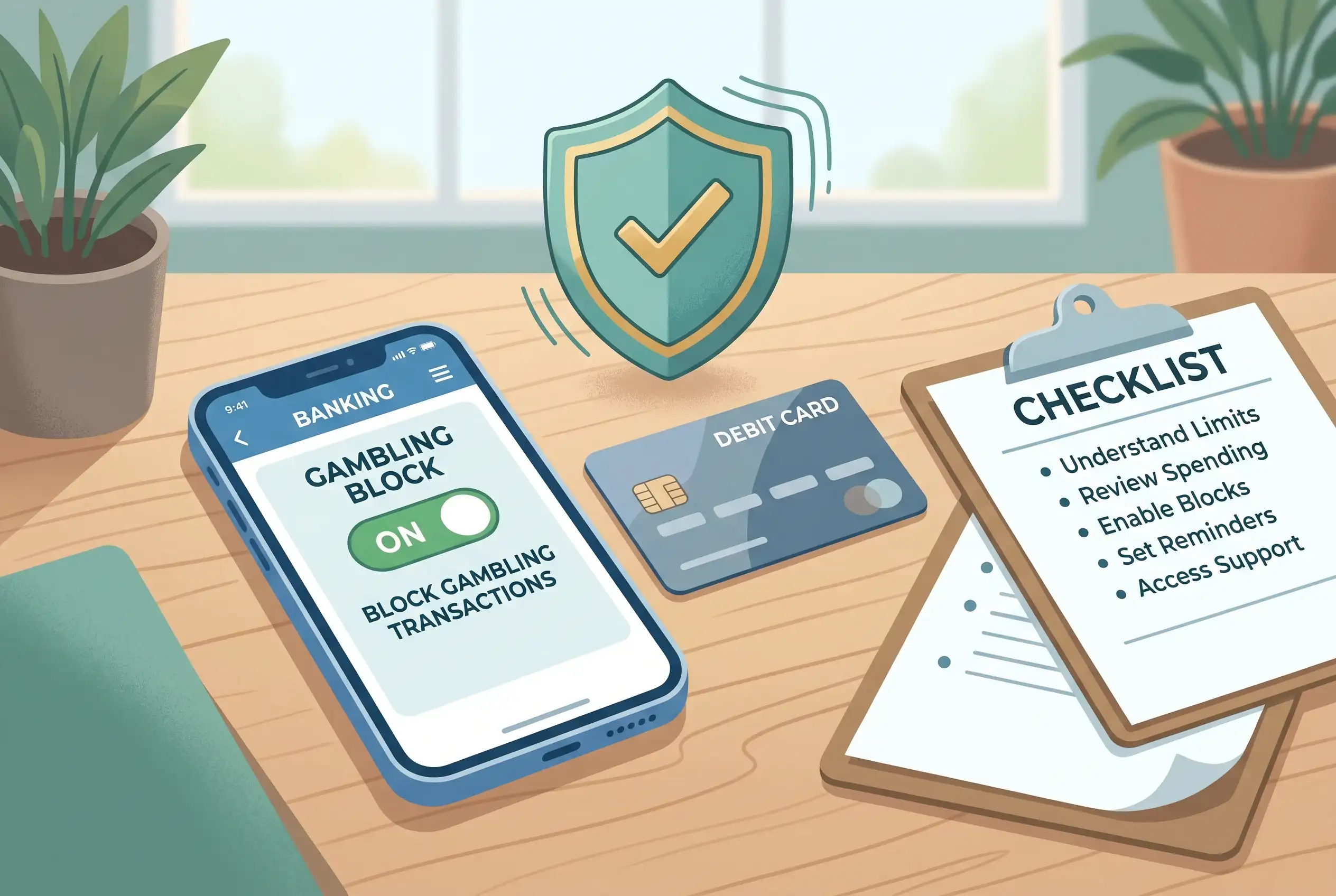
Debit cards work at most of the shortlisted operators. Credit cards work at some — non-GamStop sites offer what the UKGC has banned: the ability to deposit via Credit Cards. Whether the payment lands is a separate question. UK banks have started to flag gambling-related transactions to foreign-licensed sites more aggressively. Your bank blocked a gambling payment tagged with merchant code 7995, or you have a gambling block switched on. The casino didn’t decline it. That merchant category code is the technical hook. If your bank’s app has a “gambling block” toggle switched on, or if the bank’s fraud engine sees your card being used at a foreign gambling merchant, the deposit will bounce before it reaches the casino.
Fixes for the card-block problem: switch off the gambling block in your banking app if you have one and want to make the deposit. Try a different bank’s card. Switch to an alternative deposit route.
E-wallets are the alternative most players use. Skrill and Neteller sit at the top of the non-GamStop market and process deposits instantly and withdrawals within 24 hours at every operator in this guide. PayPal is the exception — the platform generally doesn’t process transactions for offshore gambling brands, so don’t expect it as an option. MiFinity has become a common substitute; it’s slightly less known than Skrill or Neteller but works reliably at the operators that list it. AstroPay covers the same territory for players who want a wallet not directly linked to their main bank account.
Paysafecard remains one of the more reliable deposit routes for players who want to keep gambling spending off their bank statement entirely. You buy a Paysafecard voucher at a physical retailer with cash (or online with a card), enter the code at the casino cashier, and the deposit clears. The downside: Paysafecard doesn’t handle withdrawals. Winnings come out through a different method, usually bank transfer or a different e-wallet.
Bank transfer works at most operators for larger deposits and withdrawals. UK Faster Payments is not universally supported at non-GamStop sites — phone support based in the UK, Faster Payments banking, and GBP-denominated accounts aren’t guaranteed. Some operators route bank transfers via SEPA and add a day or two for the crossing. Trustly and open banking APIs sidestep the merchant-code problem at UK banks and are worth a look where available.
How quickly do trusted non-GamStop casinos actually pay out?
Crypto withdrawals typically clear inside an hour at the shortlisted operators once internal approval completes. E-wallet cashouts (Skrill, Neteller, MiFinity) run under 24 hours. Card withdrawals take one to three working days. Bank transfers can take up to five. First-time cashouts include KYC and take longer than repeat withdrawals from the same account.
Can UK banks block deposits to non-GamStop casinos?
Yes. UK banks flag gambling transactions with merchant category code 7995 and can decline them at the payment stage. Fixes include switching off the gambling block in your banking app, using an e-wallet (Skrill, Neteller), using Paysafecard for one-way deposits, or using cryptocurrency, which bypasses card networks entirely because the transaction happens wallet to wallet.

Trusted crypto casinos not on GamStop
Crypto is where the non-GamStop market has diverged most sharply from the UKGC one. UKGC operators can’t offer cryptocurrency deposits or withdrawals under current rules. Non-GamStop sites can, and the six most commonly supported coins across the shortlisted operators are Bitcoin, Ethereum, Litecoin, Dogecoin, USDT, and USDC. Bitcoin Cash, Tron, and Solana appear at a smaller subset of sites.
The main practical reason to use crypto at a trusted non-GamStop casino is withdrawal speed. Crypto payouts clear inside the hour at most operators once the withdrawal is approved internally, and Cosmobet’s crypto rails are the fastest of the shortlist. That’s meaningfully quicker than card withdrawals (1–3 working days) and quicker than most e-wallets (up to 24 hours). Crypto also sidesteps the UK bank-block problem entirely — the deposit and withdrawal happen wallet-to-wallet, so merchant category codes don’t come into it.
“No KYC” is the phrase that shows up most in the crypto-casino marketing and does the most work per syllable. A trusted non-GamStop crypto casino may let you deposit and start playing with only an email address and a wallet. That’s a genuine registration-speed advantage. It is not the same as never being asked for documents. Most operators reserve the right to trigger KYC at a withdrawal threshold — threshold-triggered KYC: cross the verification threshold (commonly £2,000-£5,000) and the casino will request documents before releasing further withdrawals. Deposit-side no-KYC does not mean you can win £10,000 and cash out on an unverified account. Plan the KYC step in, not around.
Anonymity claims also need reading with a cold eye. Blockchain transactions are pseudonymous, not anonymous. If your wallet ever touched a KYC’d exchange (Coinbase, Kraken, Binance), the trail links to you. If the goal is to keep gambling spending off your bank statement rather than off the internet entirely, crypto delivers. If the goal is untraceable play, the technology doesn’t do what the marketing suggests.
Trusted Bitcoin casino, trusted Ethereum casino, trusted Dogecoin casino — the checklist is the same as for the fiat side. A resolvable licence on the regulator’s register. A named operator. Published withdrawal terms. A KYC trigger you understand. Complaint threads that don’t show a repeated pattern of frozen accounts.
What are the most trusted crypto casinos for UK players in 2026?
Cosmobet leads on rail speed with near-instant Bitcoin, Ethereum, Litecoin, Dogecoin, and Tron withdrawals. MyStake and Goldenbet offer broad crypto support alongside strong fiat coverage. Nine Casino combines a large game library with fast crypto payouts. All four hold Curaçao licences and pass the same due-diligence checks as the fiat-focused operators here.
New trusted non-GamStop casinos launched in 2026
New casinos launch every month in the offshore market. Newer doesn’t automatically mean better, but a 2026 launch can carry a competitive advantage: newer operators usually put more into the welcome offer to build traffic, and they tend to launch on modern platforms with mobile-first design and up-to-date provider integrations. AngliaBet is one of the more polished 2024/2026 arrivals for UK players, with 11 payment methods including a broad crypto set and a multi-vertical layout covering casino, live, crash, slots, and sports under one wallet. OdinFortune has been a strong 2026 arrival with GBP-native pricing and a four-deposit welcome package.
The tradeoff with new operators is track record. A brand that’s been operating for four years has a Trustpilot history you can read. A brand that launched three months ago doesn’t. If you’re testing a new non-GamStop casino, use it with a small first deposit, run through the full deposit-to-withdrawal cycle before you commit to a serious bankroll, and check that the licence resolves on the CGA or MGA public register before you sign up. New is fine. Untested is a separate issue.
Trusted casino apps and mobile play
Most trusted non-GamStop casinos in 2026 run mobile-first responsive websites rather than dedicated apps, which is the correct trade for players — a browser-based lobby doesn’t sit in an app store where policies can force removal, and mobile browsers handle Evolution live streams and Pragmatic Play slots without the frame-drop problems that used to plague native casino apps. MyStake and Goldenbet both offer Android and iOS apps for players who prefer a native install. The rest of the shortlist runs via mobile browser and works fine that way on any modern iPhone or Android device.
Mobile gameplay at trusted mobile casinos covers the full library. Every slot in the desktop lobby renders on mobile, live dealer streams adapt to portrait or landscape orientation, and cashier functions work identically on the smaller screen. Payment methods that require app-based authentication (Apple Pay, Google Pay, banking-app authorisation for e-wallets) actually work better on mobile than desktop because the auth handshake happens on the same device.
Non-UK, offshore, international: three names, one category
Non-GamStop, non-UK, offshore, and international are four labels for broadly the same category of operator: a casino licensed by a regulator other than the UKGC, accepting UK players, not participating in GamStop. Marketing pages use the labels interchangeably. There’s no meaningful legal distinction between them.
The one distinction worth making is between “not on GamStop” and “not accessible from the UK.” A site can be offshore and still block UK IPs — that’s the operator’s commercial choice, not a legal requirement. The eight sites in this guide all accept UK players openly. A trusted non-UK casino, a trusted offshore casino for UK players, and a trusted international casino accepting UK players describe the same underlying thing.
Sweepstakes, RTG, Playtech, NetEnt, Microgaming — clearing up the brand-name questions
A few keywords in this space cause real confusion, and they’re worth separating.
Sweepstakes casinos are a US-market model that runs on a dual-currency system to sidestep US state gambling laws — you buy Gold Coins for entertainment and receive Sweeps Coins that can be redeemed for cash prizes. They exist in a legal grey zone in some US states and are effectively not available to UK players in a meaningful way. If you’re searching for a trusted sweepstakes casino from the UK, you’re searching for a category that mostly doesn’t serve this market. Standard non-GamStop casinos are almost always the right answer to the underlying question.
Playtech, NetEnt, Microgaming, RTG (Realtime Gaming), and Pragmatic Play are game providers, not casinos. A “trusted Playtech casino” or “trusted NetEnt casino UK” is a casino that stocks that provider’s games in its lobby. Playtech, NetEnt, and Microgaming games appear widely across UKGC-licensed casinos — that’s their primary market. They also appear at several non-GamStop casinos, though the availability is patchier because the providers are selective about which offshore operators they license to. RTG has historically supplied US-facing offshore casinos and is less common in the UK-facing non-GamStop market.
Practical takeaway: if you want to play specific Playtech, NetEnt, or Microgaming titles, a UKGC-licensed casino is more likely to have them. If you want the Nolimit City, Hacksaw, and BGaming catalogue that UKGC sites stock less of, offshore is where they concentrate.
Legal status in the UK: player vs operator
It is not illegal for UK players to gamble at offshore or non Gamstop casinos, but you do so without the full protections available at UKGC-licensed sites. The Gambling Act 2005 places the criminal-liability burden on the operator, not on the customer. An offshore operator without a UKGC licence that provides remote gambling facilities to Great Britain commits an offence under the Act. The UK resident who plays there does not.
That’s the law. It’s also the source of most of the confusion, because UKGC enforcement has been visible against unlicensed operators — between October 2024 and September 2025, the Gambling Commission issued 806 cease-and-desist letters to unregulated operators and geo-blocked 314 illegal websites from UK access — and news coverage of that enforcement doesn’t always make the operator/player distinction clear. To be direct: no UK player has ever been prosecuted for playing at an offshore casino. The legal risk is the operator’s.
The practical risks are yours. You lose access to UKGC dispute resolution. Your funds sit outside the segregation regime that UKGC-licensed operators must run. If the site closes suddenly, recovery is jurisdiction-dependent. UK gambling winnings remain tax-free regardless of where the site is licensed — HMRC doesn’t tax gambling wins as income. That part is unchanged.
Can I legally play at a casino not on GamStop from the UK?
Yes. The Gambling Act 2005 places criminal liability on operators, not players. UK residents accessing offshore casinos commit no offence. The operator running a UK-facing site without a UKGC licence does. No UK player has ever been prosecuted for playing offshore. Winnings remain tax-free either way, under HMRC rules that treat gambling wins as non-income.

Responsible gambling when the UKGC isn’t your safety net
If you’re reading this section because you’re on GamStop and looking at offshore sites, the section is here for you rather than around you. GamStop exists because a lot of people found themselves needing it. Half of all registered users, 614,738 people, have opted for the maximum five-year exclusion period. Registering was a decision made carefully. Playing offshore while a GamStop period is active is a decision that undoes some of what the first one was for. That’s a real thing to sit with before the deposit form loads.
Non-GamStop casinos do offer site-level responsible gambling tools. Reputable operators publish deposit limits (daily, weekly, monthly), loss limits, session time reminders, cool-off periods (24 hours to several weeks), and site-specific self-exclusion (six months, one year, permanent). These are optional at offshore operators — no regulator requires them the way the UKGC requires GamStop integration — but the trusted sites in this guide all provide them. Use them. Setting a deposit limit at signup takes 30 seconds and does more for a bankroll than any bonus ever will.
Third-party device-level blocking works across UKGC and offshore sites simultaneously. Gamban is software that blocks access to gambling websites and apps on the device where it is installed. Coverage extends to both UKGC and offshore brands. Installation costs a small monthly subscription. GamCare provides Gamban free of charge to UK residents through its support partnership. BetBlocker is a charity-run alternative available at no cost, blocks gambling sites at the browser level, and installs in a few minutes. Both are worth running on every device that touches the internet if there’s a real risk of impulse play.
Bank-level gambling blocks are the third layer. Every major UK current-account provider now offers a gambling-transaction block inside the app — Monzo, Starling, Barclays, NatWest, Lloyds, HSBC, Santander, Halifax, TSB, and the rest. Switch it on and the bank declines transactions to gambling merchants at the payment stage, before the money leaves the account. Some banks add a 48-hour cooling-off period before the block can be lifted, which is exactly the point.
The human resources: BeGambleAware runs at begambleaware.org and connects to NHS-aligned treatment services free at point of access, delivered by registered clinicians, typically cognitive behavioural therapy over 12 to 16 weekly sessions. GamCare runs the National Gambling Helpline on 0808 8020 133, 24 hours a day, seven days a week, with counselling available online and in person at no cost. Gordon Moody runs 12-week residential treatment programmes for severe gambling addiction, delivered free of charge at centres in Dudley and Beckenham. Gamblers Anonymous runs 12-step peer-support meetings across the UK, also free.
If gambling has stopped being fun and started being something else, one of the numbers above is the right thing to type next. Not the deposit page. This is sensitive territory, and if any of that resonates personally, reaching out to the National Gambling Helpline on 0808 8020 133 for a confidential conversation is the low-friction first step.
Red flags: signs a non-GamStop casino isn’t worth your time
Some patterns come up often enough at the untrustworthy end of the offshore market that spotting one is enough to close the tab.
A licence number that doesn’t resolve on the regulator’s public register is the most reliable warning. Serious operators post working licence numbers. The dodgy ones post images of licence seals that look like PDFs but don’t link anywhere.
An operator name that appears nowhere on the site is warning two. The T&Cs must name the company, the registration number, and the address. If they don’t, or if the named entity is a shell with no traceable filings anywhere, the operator has arranged its paperwork to make itself hard to find. That’s never accidental.
Aggressive bonus terms — 60x+ wagering, seven-day time limits, £2,000 max cashout on a “£10,000 welcome” — are warning three. The site knows the average player will not clear the bonus. That’s the business model.
A Trustpilot page dominated by “closed my account after a big win under an obscure T&C” is warning four. One angry review means nothing. Twenty of the same shape means the operator has a process for it.
Domain-hopping is warning five. If the same brand name has been running under three different .com/.io/.net domains in two years, that’s usually because the previous ones got blacklisted for a reason. The pattern is trivially checkable through Wayback Machine or a WHOIS history lookup.
Live chat that never actually connects, support email addresses that bounce, and phone numbers that ring out — warning six. Test the support before you deposit, not after.
The trusted non-GamStop casino market in 2026 isn’t the wild west of 2019, and it isn’t the UKGC either. It’s a middle ground: real regulators, real operators, real payments, real risks, and real trade-offs. The eight sites in this guide are the ones we’d point a UK player at if the UKGC restrictions have made domestic play feel like walking uphill with a rucksack full of paperwork. The offshore market gives you back the room to play at your own stakes, with your own bankroll discipline, on your own timing.
That responsibility runs both ways. Trusted means the operator did its share. Bankroll discipline, deposit limits, and knowing when to close the tab — that’s the share the operator can’t do for you. Play deliberately. Read the terms. And if any of the resources in the responsible-gambling section above sound relevant to the way this last month has gone, they’re a phone call away, and none of them will judge you for picking up.
Created by the "Casino not on Gamstop" editorial team.