UK Casino Complaints and Suspicious Gambling Site Reports
 Available in US
Table of Contents
- Clear Steps for Reporting Suspicious UK Casino Sites
- Decision path: which route fits?
- If it is a withdrawal or account complaint
- If the site itself looks suspicious
- If a link, payment request or message may be fraudulent
- If your concern is personal data
- Evidence to keep before you act
- When the problem is also about control
- Common mistakes that make a case harder
Clear Steps for Reporting Suspicious UK Casino Sites
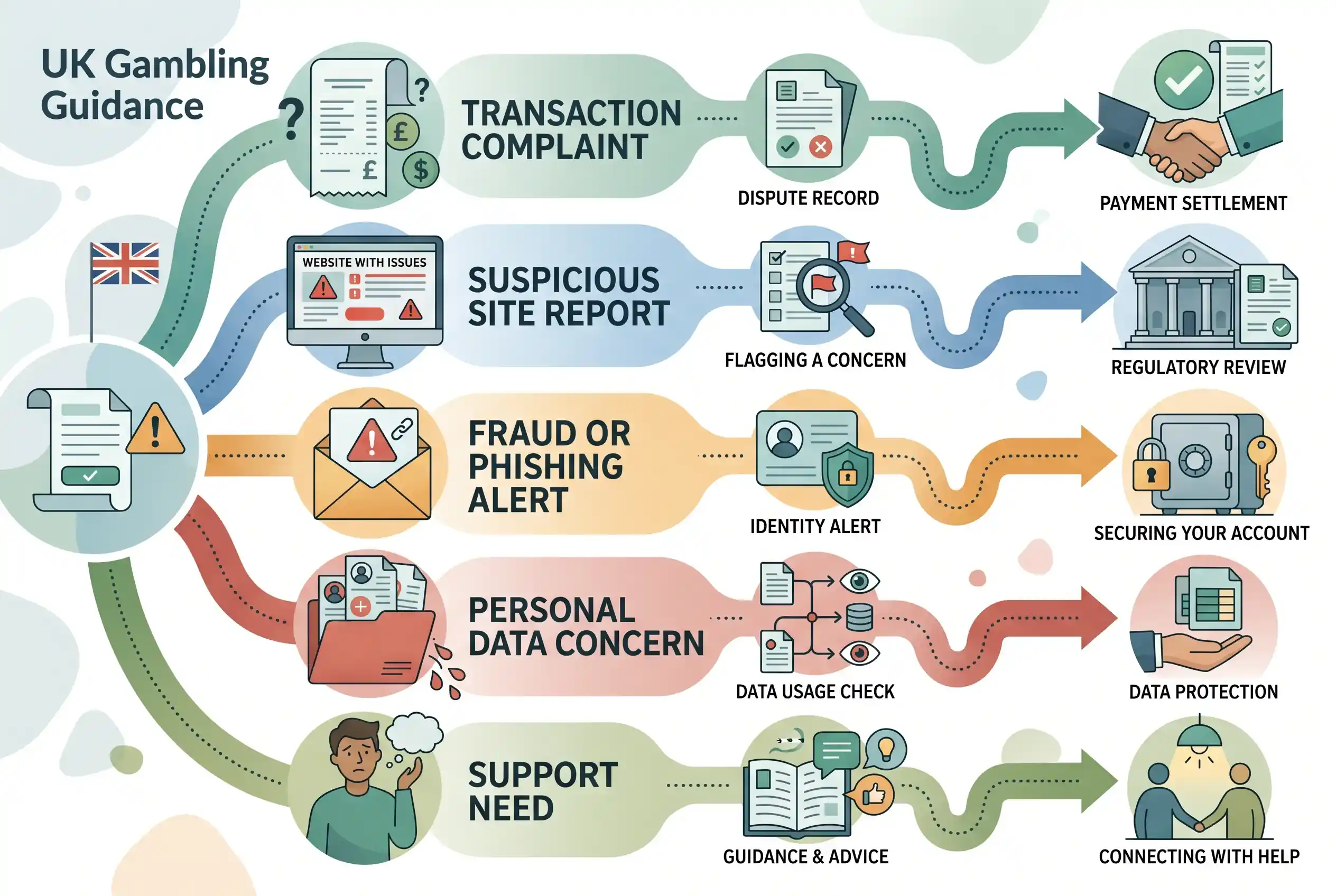
The most useful first question is not “who is at fault?” but “what kind of problem is this?” A gambling transaction complaint is usually about something the business did or did not do: a withdrawal delay, an account closure, a voided bet, a bonus dispute or unclear handling of your balance. That is different from an intelligence report about suspected unlicensed gambling, and different again from a phishing email or a concern that your personal information has been misused.
Official Gambling Commission public guidance says customers should complain directly to the gambling business first for gambling transaction disputes. The Commission does not resolve or decide individual complaints for customers. That distinction matters because sending a withdrawal dispute to the wrong place may leave the actual complaint clock untouched.
There is a separate route when the issue is suspected unlicensed gambling, suspicious activity, underage gambling or possible money-laundering concern. In that situation, the Gambling Commission’s confidential reporting route can receive information. That is not the same as asking the regulator to recover a payment for you.
Decision path: which route fits?
| Problem you are facing | First useful route | What not to assume |
|---|---|---|
| Withdrawal delay, closed account, disputed bonus, voided winnings or unclear balance handling | Complain to the gambling business through its complaints process, keep records, and follow the written route. | Do not assume the Gambling Commission will decide the individual complaint or order a payment to you. |
| The business complaint is unresolved after the process has run its course | If the dispute is eligible, use the alternative dispute resolution route named by the business after the complaint process. | Do not treat the dispute route as a guaranteed win or as a shortcut before the business has received the complaint. |
| The site appears to be unlicensed, misleading about its status, or connected with suspicious gambling activity | Save evidence and use the Gambling Commission route for telling it something in confidence. | Do not publicly accuse a named site without evidence or confuse an intelligence report with a personal complaint. |
| You clicked a suspicious link, were pushed to pay again, or think a fraud may be involved | Stop interacting with the request, preserve messages, contact your bank where payment risk exists, and use official fraud and cyber reporting routes. | Do not send further payments or identity documents just because a message threatens account loss. |
| Your personal data may have been mishandled | Complain to the organisation first about the data issue, then consider the Information Commissioner’s Office route if it remains unresolved or is refused. | Do not post identity documents, account screenshots or private data publicly while trying to prove the point. |
| The problem is tied to chasing losses, gambling after self-exclusion or feeling unable to stop | Use support and control tools as the immediate route, not another site check or another deposit. | Do not treat a complaint or a new account as the main answer to a loss-of-control moment. |
If it is a withdrawal or account complaint
For a transaction dispute, start with the gambling business. Write the complaint in a calm, dated way. State what happened, when it happened, what account or transaction the issue relates to, what rule or message the business relied on, and what outcome you are asking it to consider. Keep screenshots, chat transcripts, emails, account messages and payment references together.
The Gambling Commission’s complaint guidance says a gambling business has eight weeks to resolve a complaint from when it receives it. If the complaint is not resolved through the business process, eligible disputes may be escalated through alternative dispute resolution. The exact route should be shown by the business, and the dispute should be handled as a gambling transaction dispute rather than as a general complaint about whether you like the outcome.
A complaint is stronger when it is specific. “They are unfair” is much weaker than a dated timeline showing the deposit, the verification request, the withdrawal request, the messages received, the term relied on, and the point where the response became unclear. Avoid editing screenshots in a way that removes context. Avoid making new deposits while trying to resolve a withdrawal dispute, because that can make the timeline harder to understand and may increase harm.
Do not promise yourself that a complaint will recover money. Some disputes are upheld, some are not, and some depend on facts that only the business, customer and dispute body can assess. The safe aim is to use the correct route, keep evidence intact and avoid making the problem worse.
If the site itself looks suspicious
A suspicious site problem is different from a normal disagreement about terms. Warning signs include licensing claims that do not match register information, pressure to pay extra before a withdrawal, requests to send documents through informal channels, copied-looking company details, or a domain that does not line up with the business name shown in official information.
Before reporting, collect what you can safely collect without continuing to gamble. Record the website address, the business name shown, the trading name if one appears, payment references, messages, screenshots of licence claims, and any contact route used. If you have not already checked the Gambling Commission public register, do that carefully using domain, business name, trading name and account number where those details are available.
If the concern is suspected unlicensed gambling or suspicious gambling activity, the Gambling Commission has a route for providing information in confidence. Treat that as an intelligence route. It helps the regulator receive information; it does not turn the regulator into your individual dispute handler or a private debt collector.
If a link, payment request or message may be fraudulent
Fraud and cyber concerns need a different response. If a message asks you to pay a release fee, verify an account through a strange link, move to a private chat, use someone else’s payment method, or send identity documents outside the normal secure account area, stop before responding. Pressure and urgency are common signals that the request should not be trusted.
The National Cyber Security Centre publishes public guidance on phishing and scams, and official fraud reporting resources explain where suspected fraud can be reported in the UK. For a payment that may still be stopped or protected, contact the bank or payment provider through its normal secure route. Do not use contact details supplied inside the suspicious message itself.
Keep the original email, text or account message where possible. Save screenshots, but avoid forwarding suspicious links to friends for a second opinion. If you need to report a message, use official reporting routes and follow their instructions. If passwords or personal documents were shared, treat the issue as both a fraud concern and a data concern.
If your concern is personal data
A data concern may involve identity documents, payment details, account access, unwanted marketing, a privacy request, or a worry that information has been shared wrongly. The Information Commissioner’s Office advises people to complain to the organisation first about how their information has been handled. If the organisation does not resolve the issue, refuses to respond, or the response does not address the concern, the ICO route may then be relevant.
Keep the data complaint separate from a gambling transaction complaint where you can. A withdrawal dispute might be about whether terms were applied correctly. A data complaint might be about how your documents were collected, stored, used or answered. The same incident can create both issues, but each route needs clear wording.
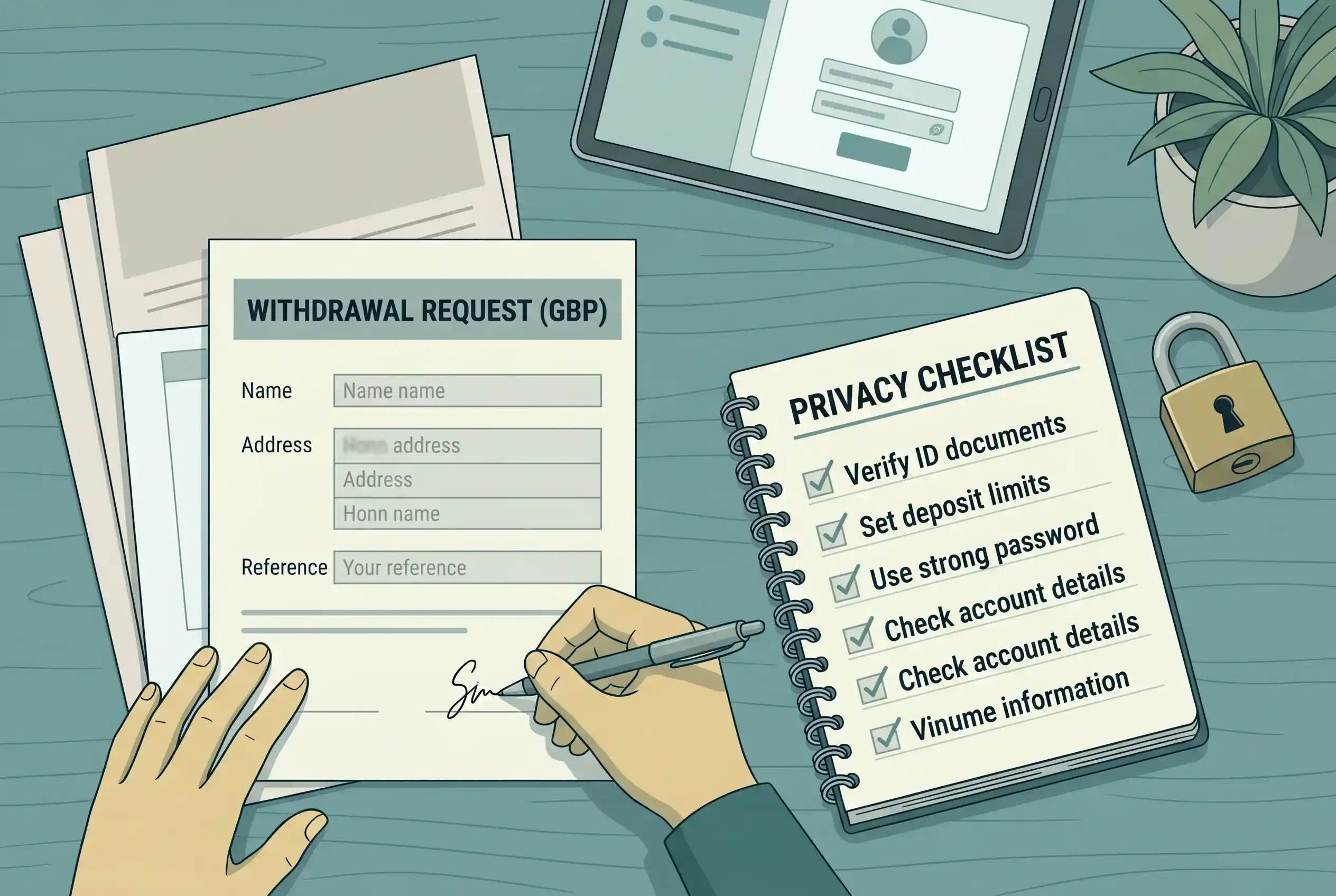
Do not publish your passport, driving licence, bank statement, account number, payment references or private messages online to prove a complaint. Reducing harm means protecting your own information while you challenge the handling of it.
Evidence to keep before you act
- Timeline: dates and times for registration, deposit, bonus acceptance, identity request, withdrawal request, complaint and response.
- Account records: account username or reference, transaction references and copies of account messages.
- Terms evidence: screenshots or saved copies of the terms that applied when you acted, especially if the site later changes wording.
- Payment evidence: bank or wallet references, but not public copies of full card numbers or private security details.
- Contact evidence: emails, chat transcripts and the route used to contact the business.
- Licence or identity claims: screenshots of any claimed licence, business name, domain, address or registration detail that you compared with official information.
When the problem is also about control
Sometimes the practical complaint is real, but it is not the only issue. If the dispute is happening alongside self-exclusion, repeated deposits, borrowing, hiding losses, or a strong urge to gamble again, support should not wait until the complaint is finished. A complaint route can deal with a transaction question. It cannot give you distance from the next deposit.
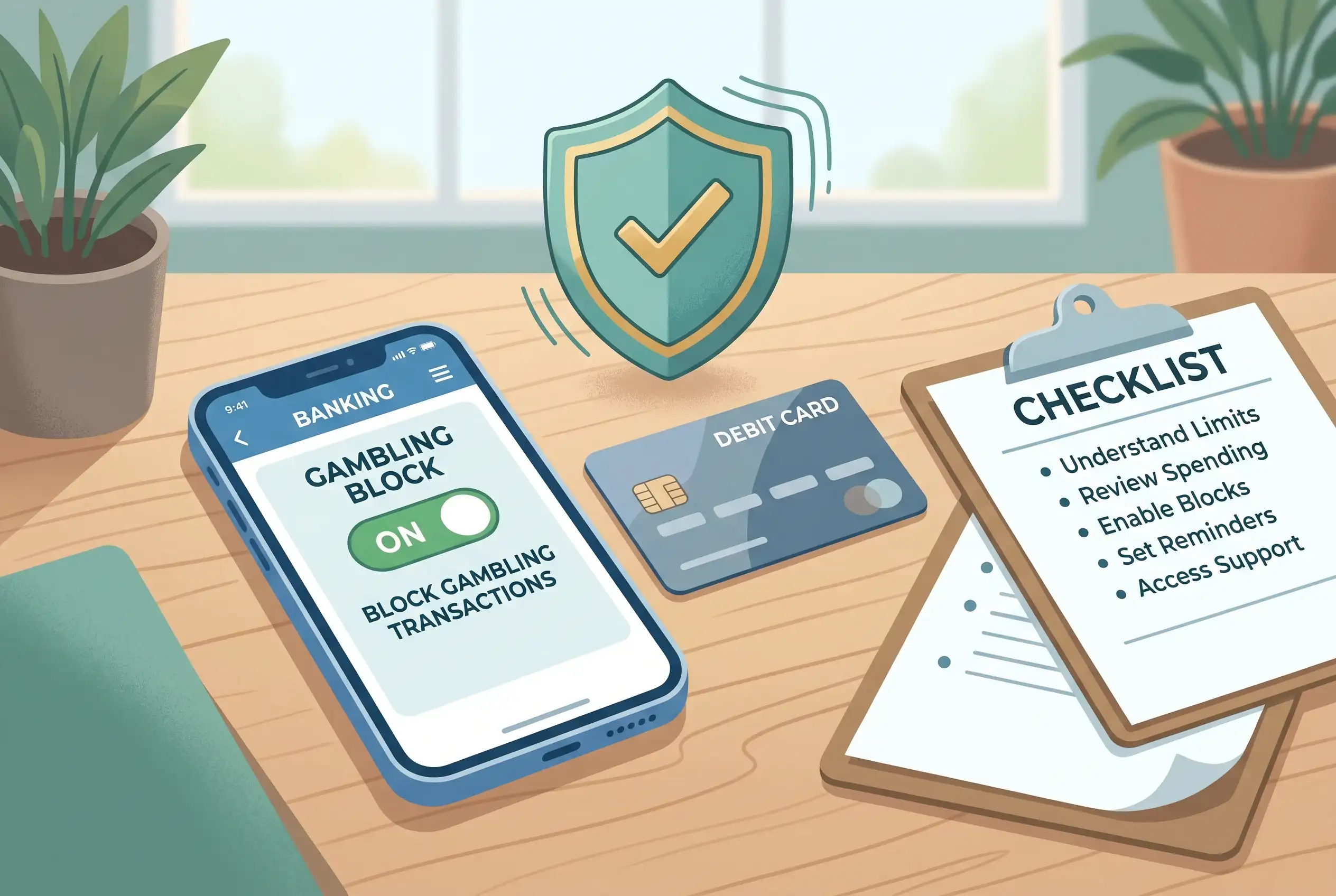
If gambling feels hard to stop, move from complaint mechanics to support and control options. That may include self-exclusion, blocking software, bank gambling blocks, trusted-person support and helpline support. The point is not blame. It is to make the next unsafe action harder while the dispute or report is handled calmly.
Common mistakes that make a case harder
Going straight to the wrong body
If the issue is an individual transaction complaint, the business complaint process usually comes first. The regulator can receive intelligence about wider issues, but it does not decide your personal complaint.
Continuing to pay while trying to resolve a problem
Extra deposits can blur the timeline and increase harm. If a withdrawal or verification issue is unresolved, stop adding money until you understand the position.
Using public posts to share private evidence
Public pressure can expose your own personal data. Keep evidence, but use official complaint, dispute, fraud, cyber or data-protection routes rather than posting identity documents or account details.
Created by the "Casino not on Gamstop" editorial team.