UK Casino Risk Signals and Non GamStop Deposit Checks
 Available in US
Table of Contents
- Mapping Risk Signals Before Depositing at Non GamStop Casinos
- Licence signals: start with official status, not presentation
- Terms and funds: read the boring parts first
- Payments: convenience can be a trap
- Privacy and suspicious links
- Before you deposit: a practical checklist
- Three common scenarios
- What a risk signal does not prove
- If gambling feels hard to stop
- Frequently asked questions
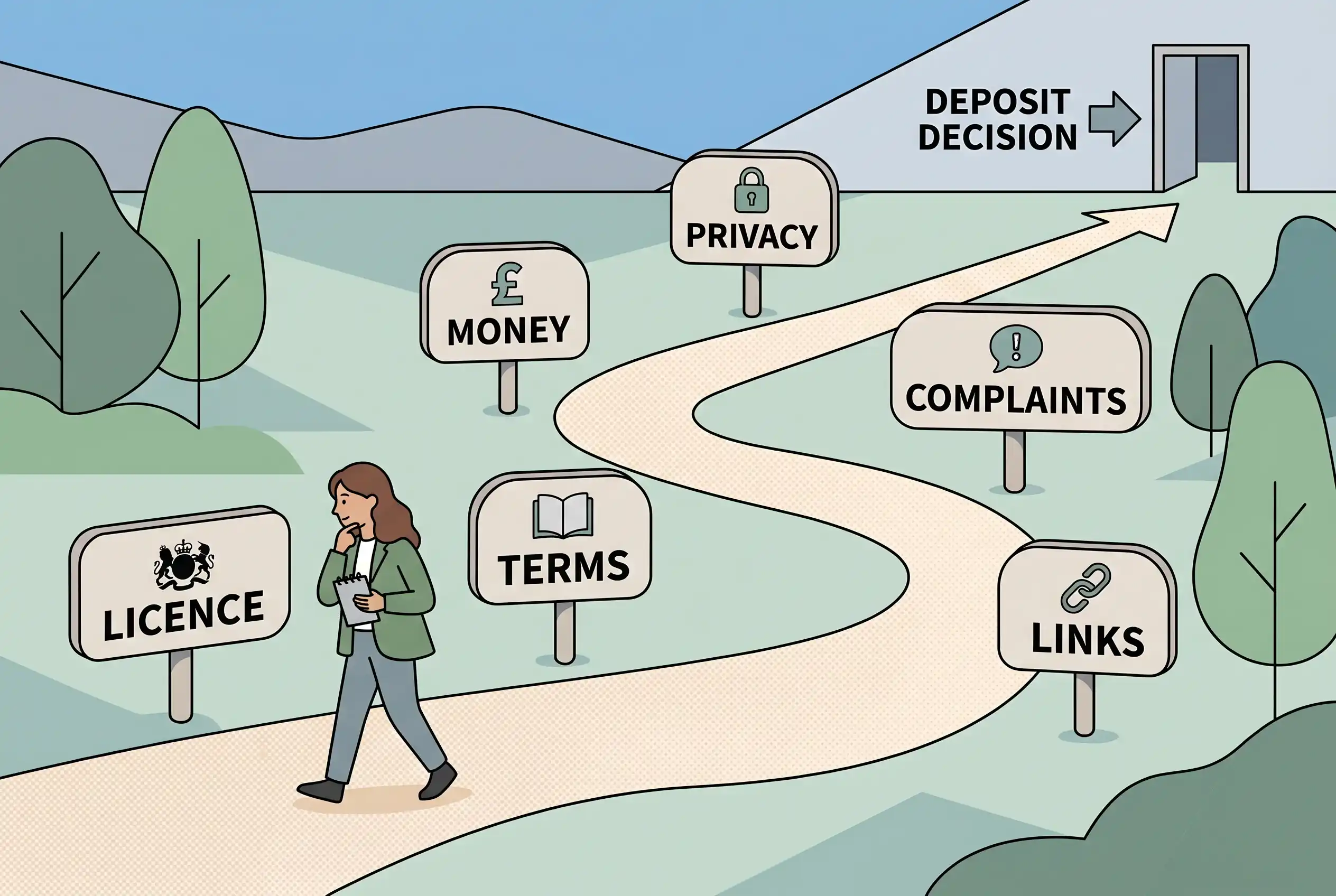
Mapping Risk Signals Before Depositing at Non GamStop Casinos
| Area to check | Why it matters | Where to verify or what to do |
|---|---|---|
| Licence and status | If the site is unclear about Gambling Commission status for Great Britain, you may be outside the protections you expected. | Use the register-check process and compare domain, business name, trading name, account number and status. |
| Self-exclusion claim | Marketing that focuses on avoiding GAMSTOP can target people who are already trying to reduce access. | If you are self-excluded, treat the claim as a reason to use support tools, not as a reason to deposit. |
| Payment claim | Payment-processing claims can be used to make a site feel convenient, but official action against illegal gambling can involve payment disruption. | Do not use payment workarounds. Read the dedicated payment guide when available and pause if the site pushes unusual or rushed transfers. |
| Terms and customer funds | Licensed operators are expected to use fair and transparent terms, and customer-funds information has specific protection levels. | Look for plain terms on withdrawals, bonus conditions, dormant accounts and customer funds before depositing. |
| Privacy and data | Gambling accounts can involve identity details, payment data and behavioural information. | Check whether the privacy information clearly explains purposes, retention and sharing in accessible language. |
| Complaint and reporting route | If there is no clear route, a later dispute can become harder to handle. | Before depositing, find how complaints are handled. If a problem already exists, use the complaints and reporting guide. |
Licence signals: start with official status, not presentation
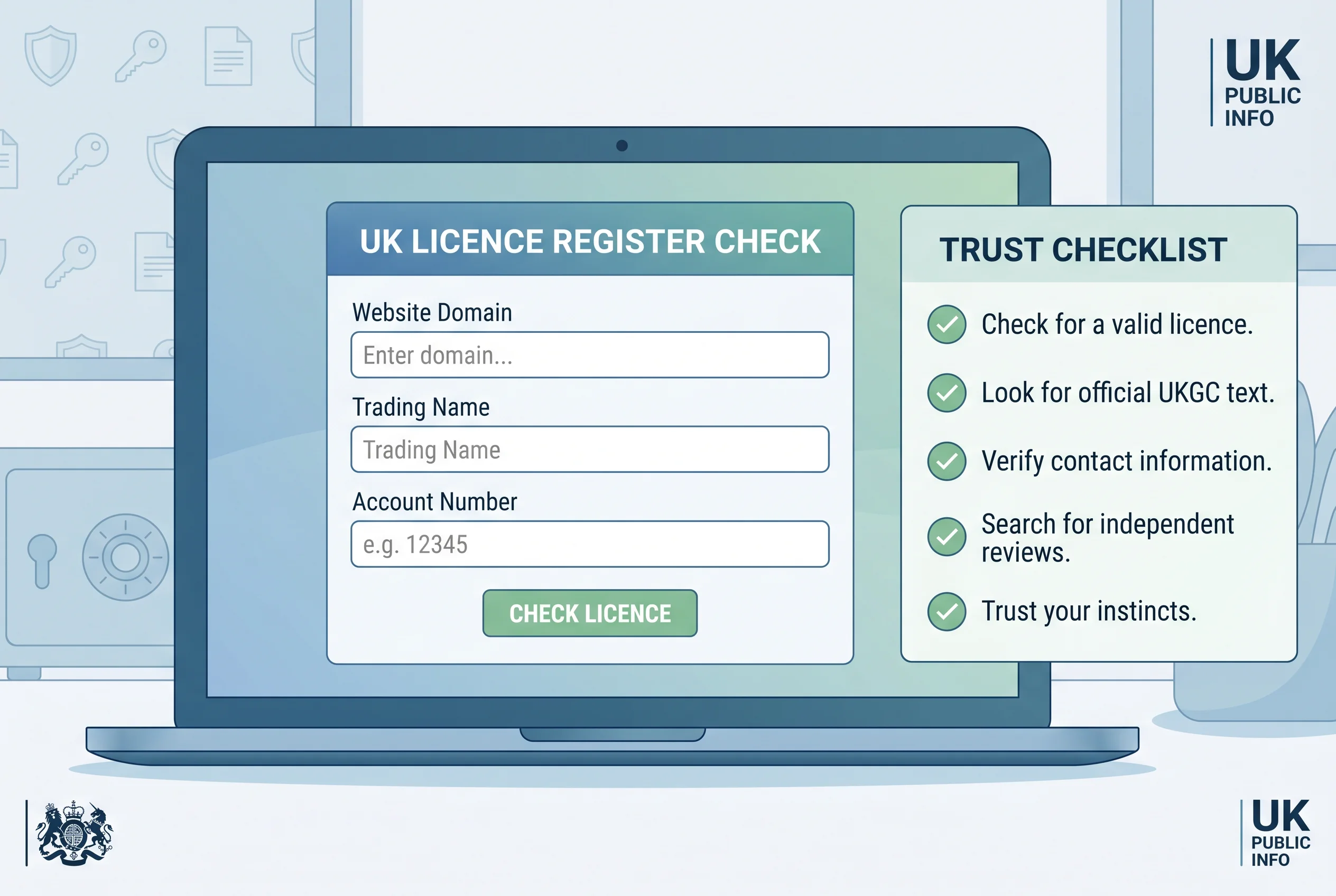
A polished website can still leave important questions unanswered. Look for an account number, status link, clear business name and domain match. If the only evidence is a copied badge, a phrase such as “licensed offshore”, or a statement that the site welcomes UK players without GAMSTOP, you do not have enough to rely on.
The Gambling Commission describes payment processing, advertising and promotion as areas involved in disrupting illegal gambling. That matters because the risk is not limited to the gambling game itself. Promotion, payment routes and misleading status claims can all be part of how a risky site reaches people. When the official position is unclear, do not move on to bonuses or payment speed as if the main question has been settled.
Terms and funds: read the boring parts first
Terms are not just background legal text. They tell you how an account may be restricted, when verification may be required, how balances are treated, what bonus conditions apply and what happens to funds in certain circumstances. Official Gambling Commission material describes the importance of fair and transparent terms and practices for licensed operators. For a reader, the practical check is whether the terms are easy to find, written clearly and consistent with the claims made on the sign-up page.
Customer-funds information deserves special attention. Public guidance describes different levels of protection: not protected, medium protection and high protection. Open bets are not treated as customer funds for these arrangements. Those categories do not guarantee that you can recover money in every problem, but they help you understand what the site is saying about balances that are held in your account.
A warning sign is when the site makes promotional promises but hides withdrawal rules, bonus restrictions, account-closure terms or customer-funds information. Another warning sign is when the terms exist but are vague, contradictory or written in a way that makes the main conditions hard to understand before you deposit.
Payments: convenience can be a trap
Fast deposits can make a gambling site feel easy to use. That does not make the payment route safe or sensible. If a site encourages unusual transfers, pushes you away from normal protections, tells you to ignore a bank warning, or presents a block as a minor obstacle, step back. A payment method is not just a technical detail; it affects control, dispute options and the information you may need to provide.
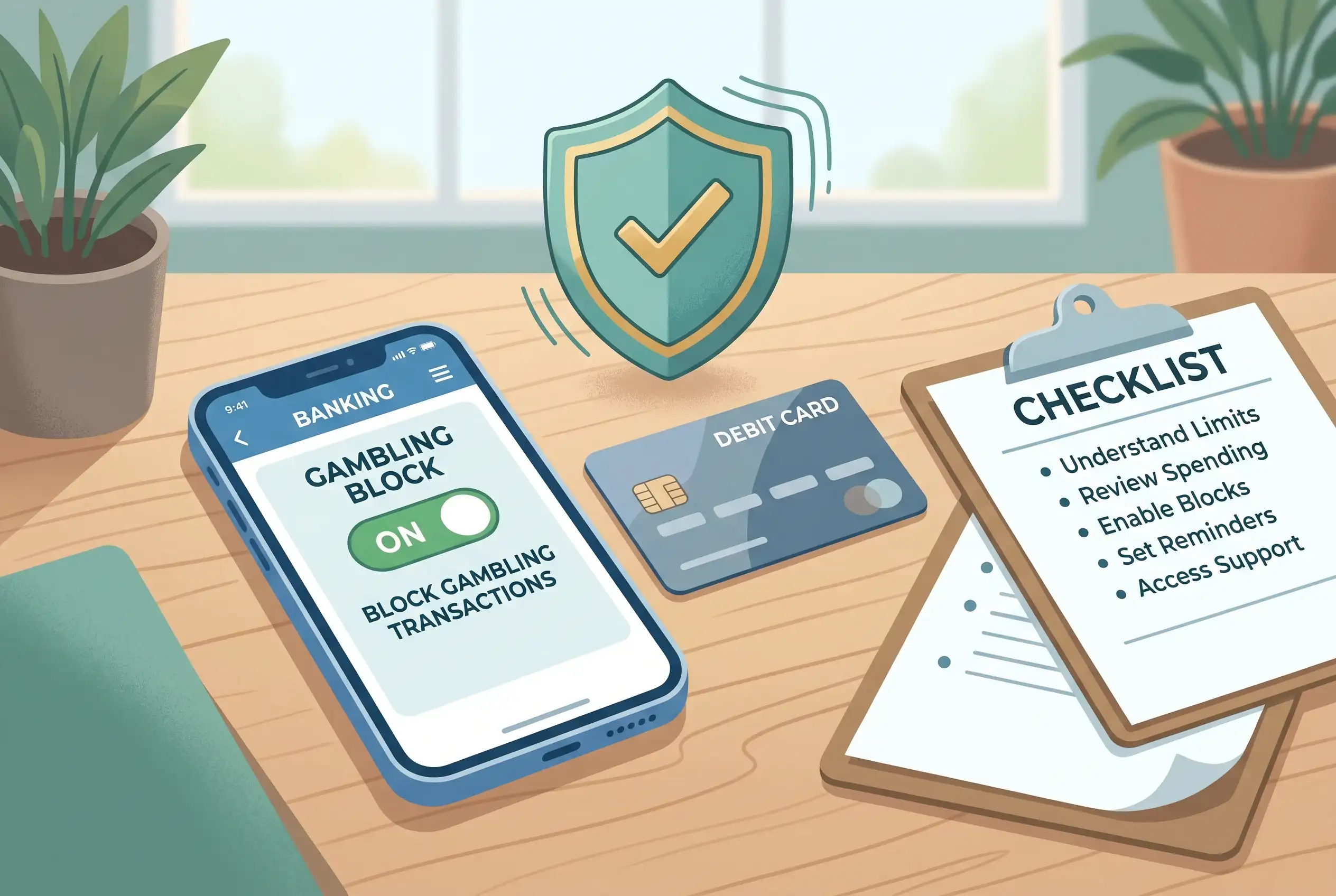
Do not treat a payment claim as proof of legitimacy. A site may advertise many payment methods, but availability, fees, limits and withdrawal rules can depend on terms that are easy to miss. It is also risky to look for ways around bank gambling blocks or card restrictions. Those controls may be there because you set them, your bank offers them, or rules require them in a licensed context. If a control is helping you slow down, let it do its job.
Privacy and suspicious links
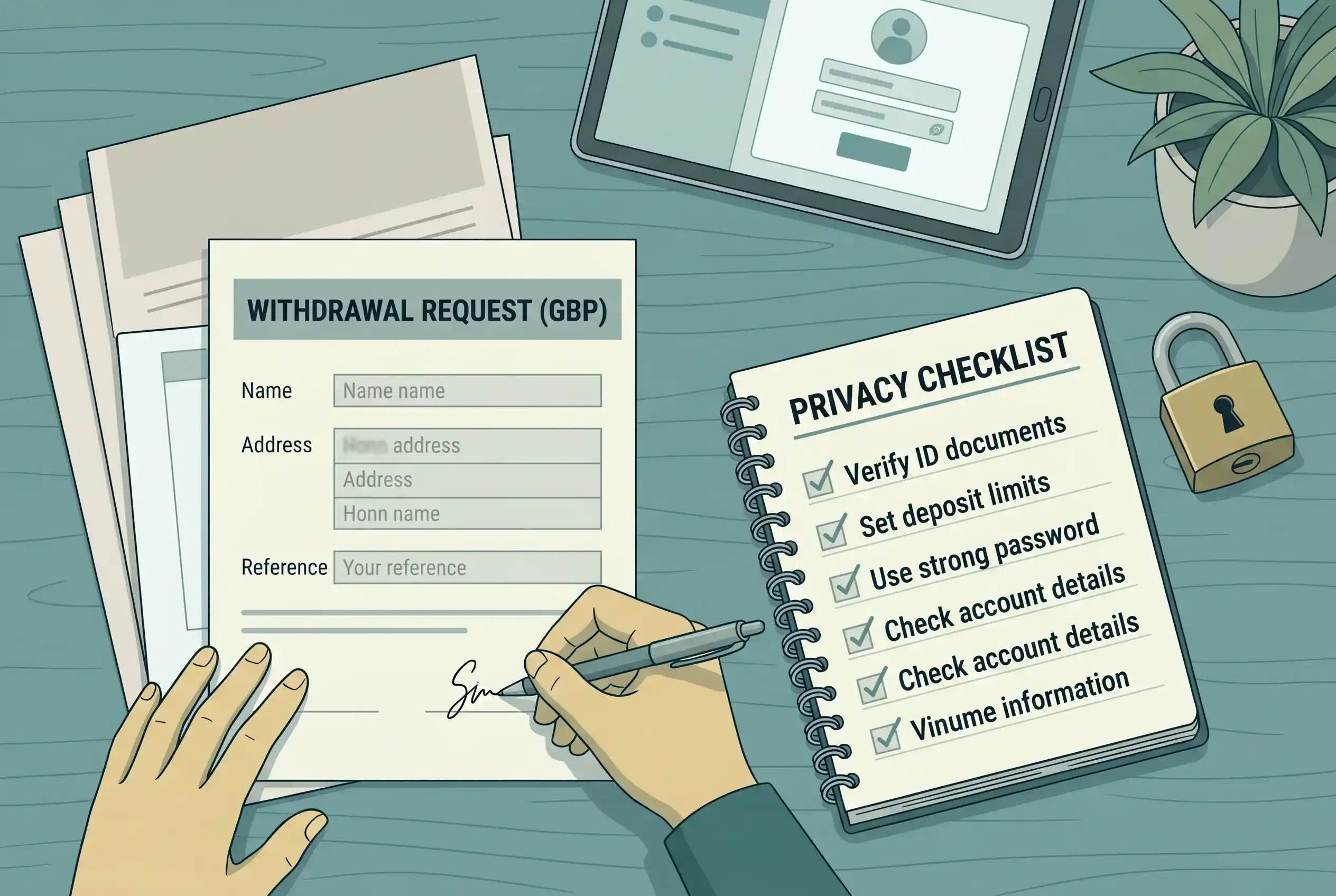
Opening a gambling account can involve personal details, payment information and identity checks. Privacy information should explain why data is collected, how long it is kept and who it may be shared with, in language that a person can understand. If a site asks for sensitive documents but gives only vague privacy wording, that is a reason to pause.
Be especially cautious with links from private messages, social posts, adverts and groups promising access to non-GAMSTOP sites. Official cyber-safety guidance warns that suspicious links and phishing can lead to theft of payment or personal information. You do not need to click a link to evaluate a claim. Type official addresses yourself where needed, check the domain carefully, and avoid sending documents through informal channels.
Before you deposit: a practical checklist
- Have you checked the official licence position rather than relying on a logo or review page?
- Can you identify the business name, trading name, domain and account number?
- Do the terms clearly explain withdrawals, identity checks, bonus conditions and account restrictions?
- Can you find customer-funds information and understand the level of protection described?
- Does the privacy information explain data use, retention and sharing in clear language?
- Is there a clear complaint route before you pay, not only a chat box after payment?
- Are you checking calmly, or are you reacting to losses, pressure, stress or a self-exclusion block?
- Would you still deposit if the bonus, urgency message or payment convenience were removed?
Three common scenarios
A site looks professional but hides the licence details
Professional design does not solve an unclear status question. If you cannot match the site to official details, stop at that point. Do not let a polished layout, chat response or bonus offer become a substitute for a register check.
The terms are available but hard to understand
If the terms are so unclear that you cannot explain the withdrawal conditions, bonus restrictions or customer-funds position to another person, you have not understood enough to make a good decision. Clear terms are part of trust.
The site is attractive because you are blocked elsewhere
This is the most important warning sign. If the appeal is that a block, self-exclusion or bank control does not apply, the issue is not just site risk. It is gambling control. Use the support and control guide rather than continuing to compare sites.
What a risk signal does not prove
A warning sign does not always prove that a site is dishonest. It may mean the site is poorly run, unclear, outside the framework you expected, or simply not suitable for you. You do not have to prove the exact reason before deciding not to deposit. The standard can be much simpler: if the site cannot answer basic questions clearly before taking money, it has not earned your trust.
The reverse is also true. A site that passes one check is not automatically safe in every practical sense. Licence status, terms, payments, data use, complaint routes and your own gambling control all matter. The strongest decision is usually made when these checks point in the same direction. If several are unclear, pause.
If gambling feels hard to stop
Strong urges, chasing losses, hiding gambling, borrowing to continue, or looking for sites after self-exclusion are not small details. They are signs that the next useful action may be support rather than more checking. That can mean blocking tools, bank gambling blocks where available, self-exclusion, talking to a specialist gambling support service, or speaking with someone you trust.
This page is designed to reduce risky decisions, not to help anyone continue when protections are already in place. If you are reading because you want to get around a block, close the gambling page and use a control tool that removes the immediate choice.
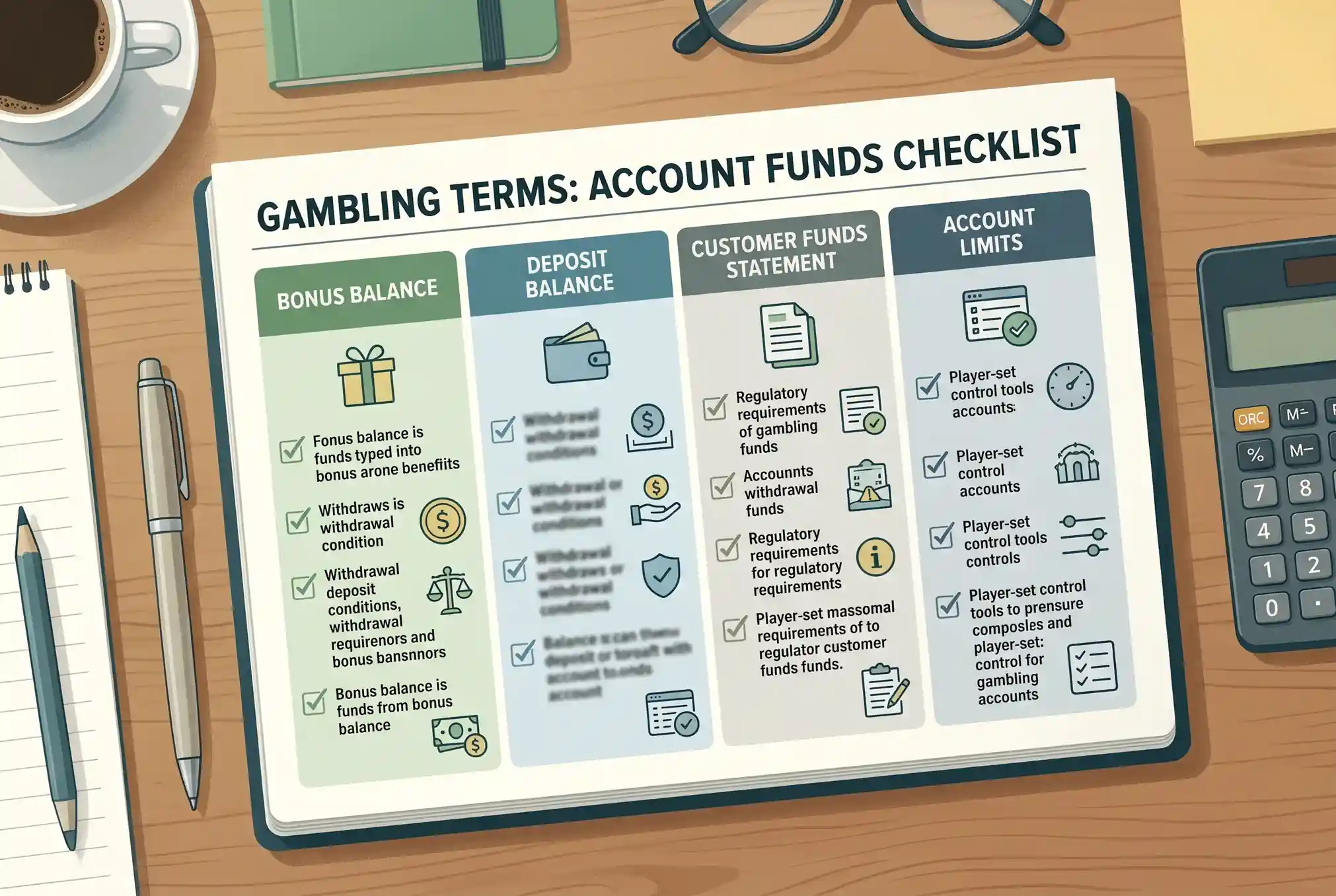
A common red flag involves predatory promotions, so always review the bonus terms, customer funds and account limits carefully.
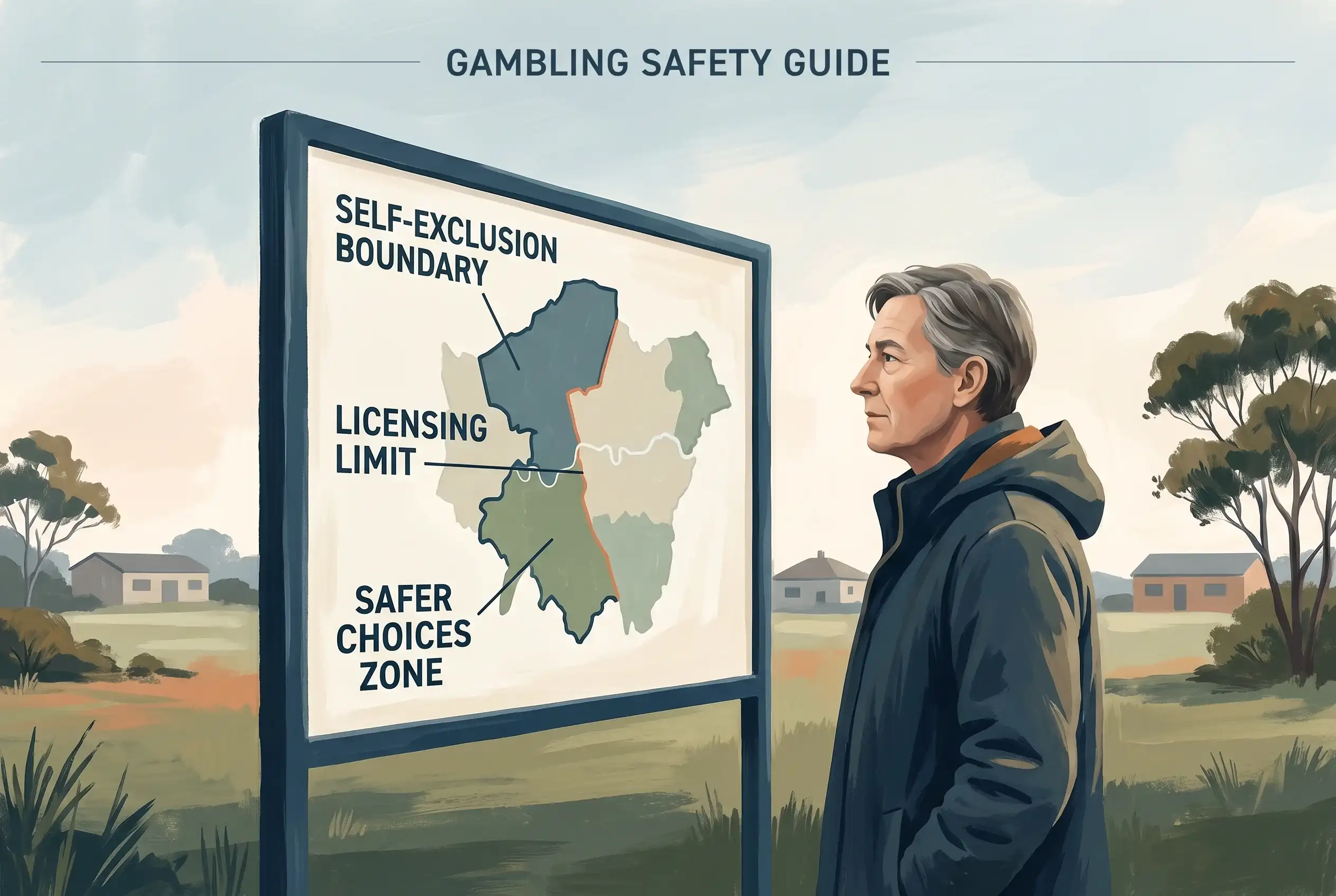
Protecting your money is the primary goal of our reliable UK gambling safety guide.
Frequently asked questions
Is one risk signal enough to walk away?
Yes. You do not need a full investigation before protecting your money and data. One serious mismatch or unclear term can be enough reason to stop.
Are all sites outside GAMSTOP the same?
No, but that is not the main point. The phrase signals that official protection boundaries and personal control need careful thought before any deposit decision.
Should I send extra documents to unlock a withdrawal?
Do not send documents through informal channels or before understanding who is asking, why they need them and how your data is handled. Read the identity and withdrawal guide when available.
What if I already deposited?
Keep records, stop sending more money, read the terms, and use the relevant complaint or reporting route. Do not let a dispute push you into another deposit.
Created by the "Casino not on Gamstop" editorial team.