UK Casino ID Checks and Fast Withdrawal Verification Rules
 Available in US
Table of Contents
- Identity Verification Checks for Fast Casino Withdrawals
- A step-by-step way to read ID and withdrawal information
- What withdrawal friction may mean
- Why “no verification” is not a safe promise
- What privacy information should tell you
- Withdrawal checks and fair timing
- Before sending documents, check these points
- If the situation already feels wrong
- Questions people often ask
Identity Verification Checks for Fast Casino Withdrawals
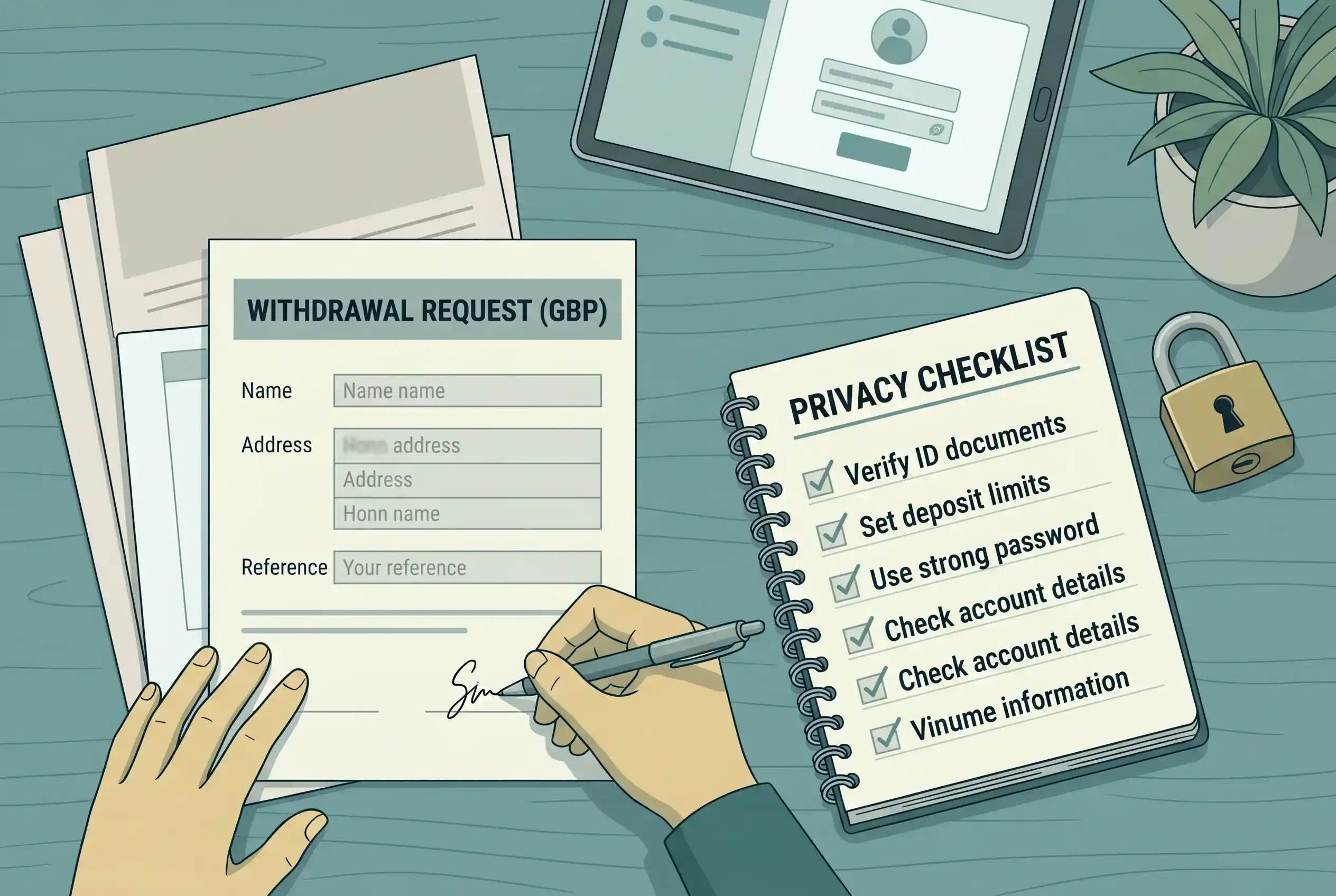
In the Great Britain licensed remote-gambling framework, identity verification is not an optional extra after a customer has started gambling. Gambling Commission licence conditions require licensed remote operators to verify identity before permitting gambling. The same condition also expects customers to be told before deposit what identity documents or information may be required.
That matters for two reasons. First, a serious gambling business should not present identity checks as a surprise only after money is locked in. Secondly, a site that boasts about avoiding verification is not automatically better for the customer. It may be asking you to trade short-term convenience for weaker protection, unclear data handling and harder complaint routes.
A sensible check is not “will they ask for ID?” but “what do they say, before I deposit, about identity, data, withdrawals and legal obligations?” If the answer is vague, hidden or inconsistent, do not fill in the missing detail with hope.
A step-by-step way to read ID and withdrawal information
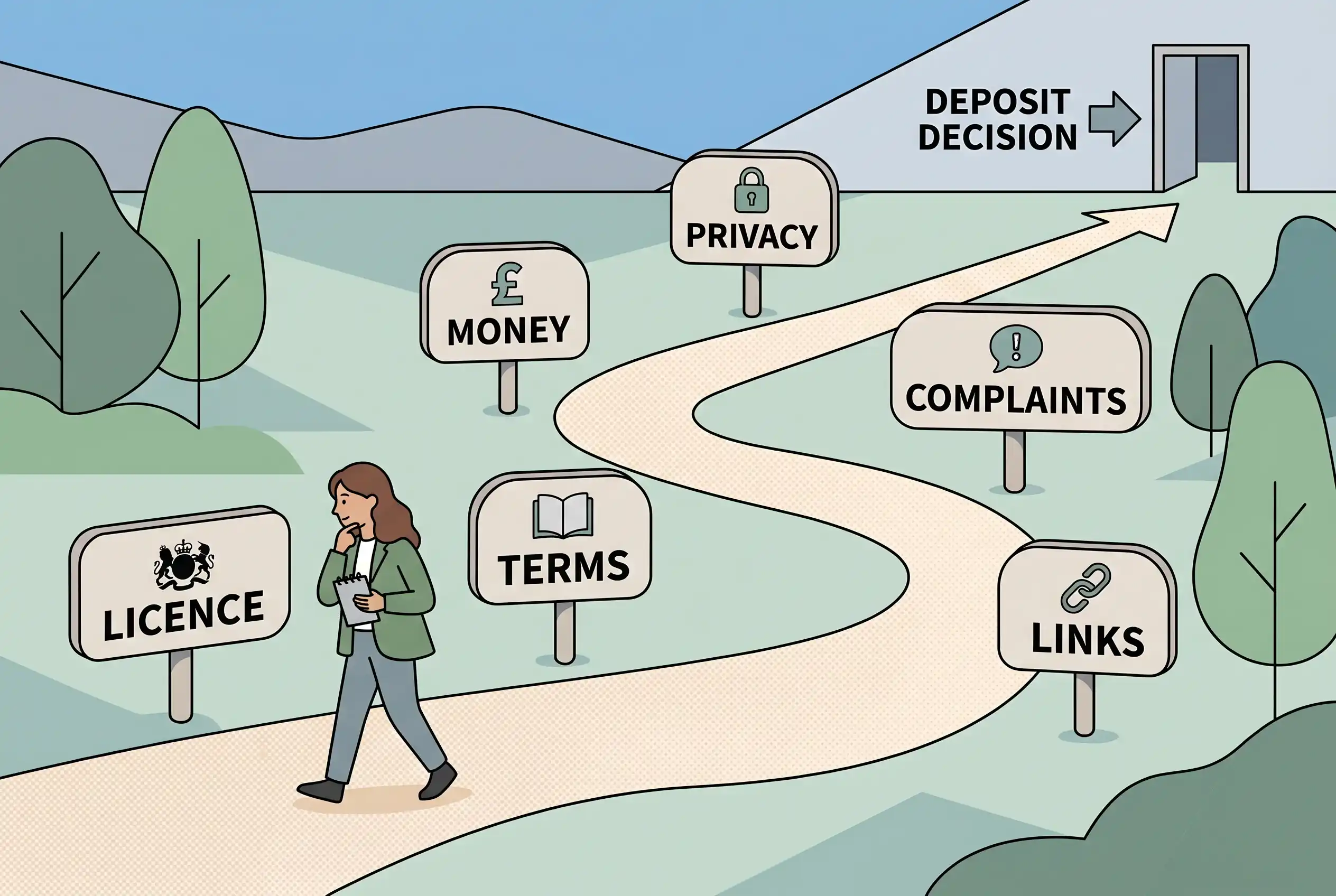
- Before opening an account, read the legal and privacy pages. Look for the business name, licensing details, privacy information, contact route and complaint route. If the site hides who controls your data, that is not a small detail.
- Before depositing, read what identity information may be needed. A licensed remote business should explain what documents or information might be requested. If a site says nothing until after you have paid, the timing deserves caution.
- Before accepting a promotion, read the withdrawal rules. Bonus conditions, deposit balances, identity checks and payment method rules can all affect the journey from deposit to withdrawal. Do not judge the account by the headline offer.
- If documents are requested, compare the request with the published information. Is the request coming through the site’s normal secure account area? Does it match the types of checks described before deposit? Is the explanation clear?
- If the request seems suspicious, stop and keep records. Save messages, screenshots and transaction references. Do not send repeated documents through informal channels or to addresses that are not clearly connected with the business.
- If a withdrawal dispute develops, use the complaint route. A complaint is different from a fresh account check. Follow the business process, keep copies and move to the relevant dispute or reporting route if the response does not resolve the issue.
What withdrawal friction may mean
| Situation | Possible explanation | Practical response |
|---|---|---|
| ID requested before any gambling is allowed | This can fit the licensed remote framework, provided the request is clear and handled securely. | Read the privacy information and check that the business details and licensing information line up. |
| ID requested only after a withdrawal | Some legal obligations can still arise at that point, but information that could reasonably have been requested earlier should not be used to restrict withdrawal unfairly. | Compare the request with the site’s pre-deposit information and keep a written record of the timeline. |
| Repeated or changing document demands | The business may be carrying out checks, or the process may be poorly explained or unreasonable. | Ask for the reason in writing and move to the complaint route if the explanation does not make sense. |
| Request to use someone else’s account or documents | This is a serious warning sign and should not be treated as a shortcut. | Do not use false details, another person’s documents or multiple accounts to avoid checks. |
| Pressure to deposit again before withdrawal | This may indicate a risky or suspicious demand, especially if it is not clearly explained in terms. | Stop paying, keep evidence and use complaint or reporting guidance rather than sending more money. |
Why “no verification” is not a safe promise
A “no verification” claim can be appealing when the user wants speed or privacy. The problem is that gambling accounts involve money, age checks, fraud controls, legal duties and personal data. A site that says identity checks will never happen may be oversimplifying, hiding the real process, or operating outside the protections that a UK reader expects from a licensed environment.
There is also a withdrawal risk. A person may deposit because the account feels easy, then meet document requests only when trying to withdraw. Sometimes checks at that stage may be connected to legal obligations, but the customer should still ask whether the business explained the process before deposit and whether the request is proportionate, secure and consistent.
The safer approach is to prefer clarity over convenience. You should be able to understand what information may be requested, why it may be requested, how it will be handled, and what complaint route exists if the process becomes unreasonable.
What privacy information should tell you
Identity documents contain sensitive information. A gambling site asking for them should not leave you guessing about data use. UK data-protection guidance expects people to be informed about matters such as purposes, retention and sharing. In plain English, that means the site should explain why it wants the information, who handles it, who it may be shared with, how long it is kept and how you can use your data rights.
Do not send documents through informal channels simply because a message asks you to. Use the site’s secure account area where available and check that the request is connected with the business you are dealing with. If the site uses a third-party verification provider, read how that provider is named and how the privacy information explains the relationship.
A privacy page does not prove that every process is good. It is a minimum transparency check. If there is no meaningful privacy information, or if the wording is too vague to explain document handling, treat that as a reason to pause before handing over data.
Withdrawal checks and fair timing
Official guidance on withdrawal restrictions makes an important distinction. Businesses should not use withdrawal requests as a reason to demand information that they could reasonably have requested earlier. At the same time, other legal obligations may still require information at the withdrawal stage. Both points matter. It is too simple to say every withdrawal check is wrong, and it is also too simple to accept every late demand without question.
To judge the situation, build a timeline. What did the site say before deposit? What documents were requested before gambling was allowed? What changed at withdrawal? What reason was given? Was the request linked to a legal obligation, a payment rule, a bonus term or a security check? A clear timeline helps you decide whether to continue the account process, make a complaint, or seek advice from a suitable support route.
Keep the tone practical when you contact the business. Ask for the specific reason for the request, the secure way to provide documents, the expected handling process and the complaint route if you disagree. Do not send false documents, edited documents, someone else’s documents or details that are not yours.
Before sending documents, check these points
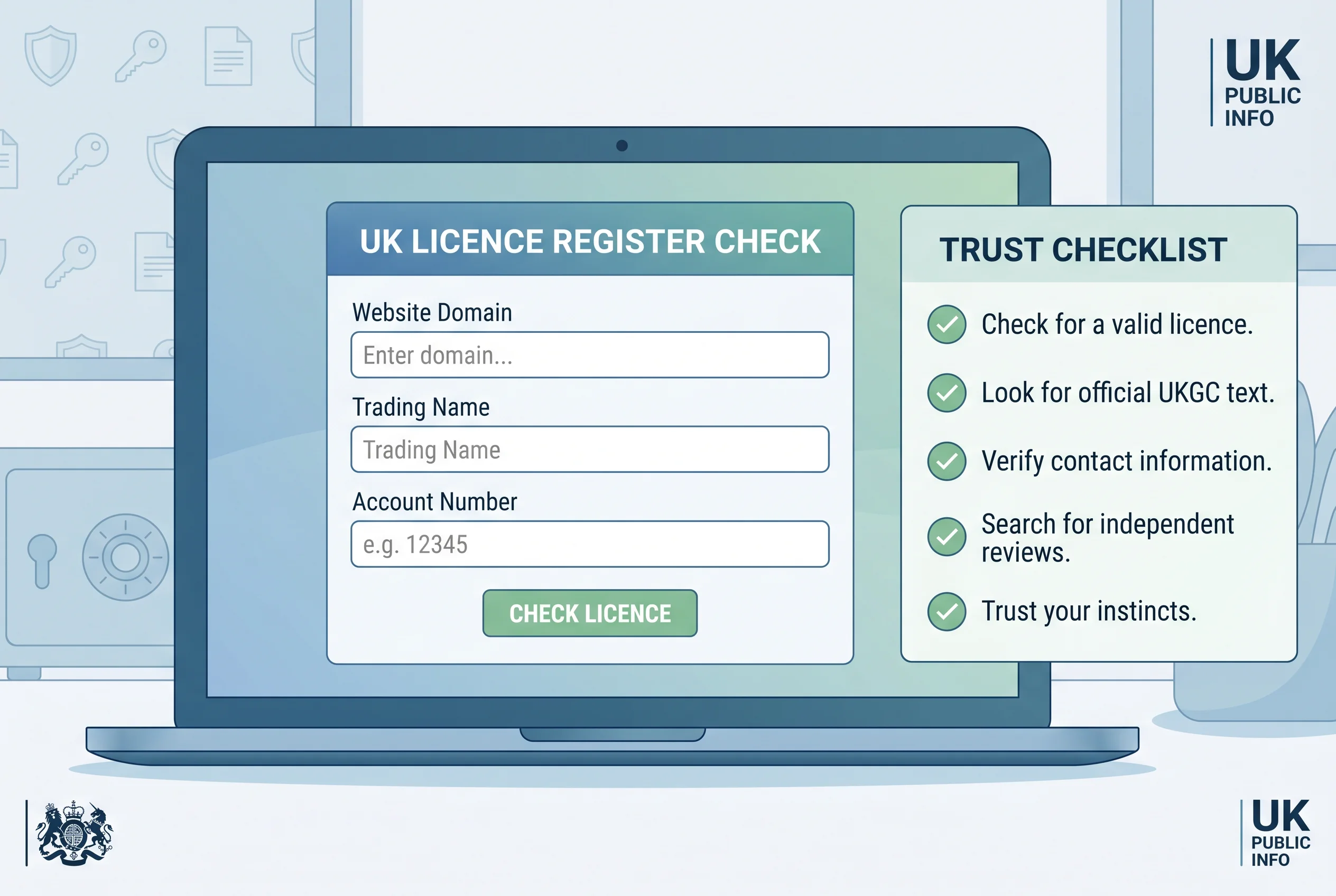
- The domain, business name and licence information have been checked against official information.
- The request is explained through the site’s normal account or support system, not only through an informal message.
- The privacy information explains purposes, sharing, retention and data-rights routes in understandable language.
- The document types requested match what the site said before deposit, unless a new legal obligation is clearly explained.
- The business has a complaint route that you can use if the process becomes unclear, excessive or unresolved.
- You are not being pressured to deposit again, open another account or use another person’s information.
If the situation already feels wrong
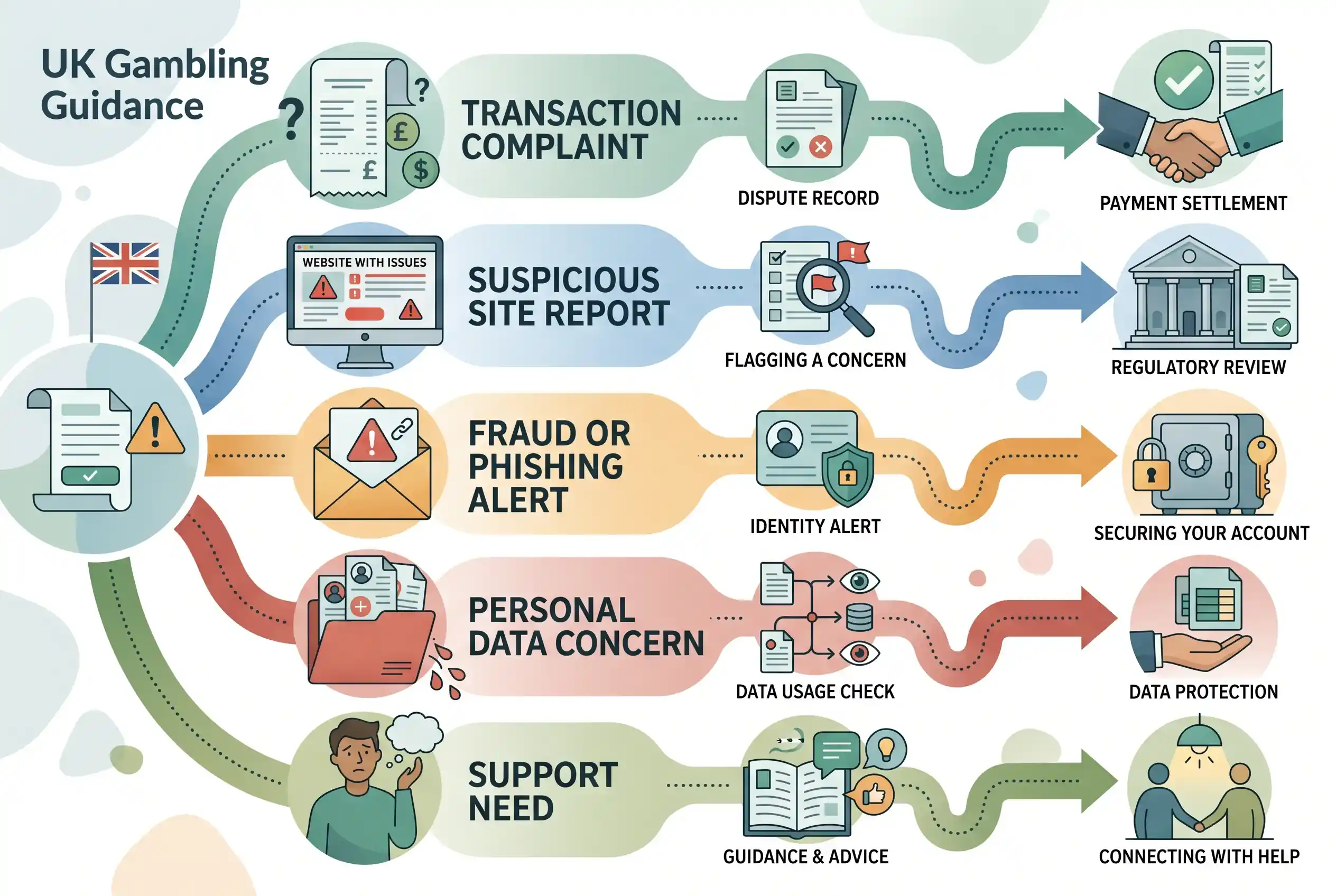
Stop making new deposits while the identity or withdrawal issue is unresolved. Keep copies of account pages, terms, messages, document requests and transaction references. If you believe the site is misusing your personal data, the data concern belongs in the data and complaint route. If you believe the site is pretending to be licensed or taking money through misleading claims, the suspicious-site route is more relevant.
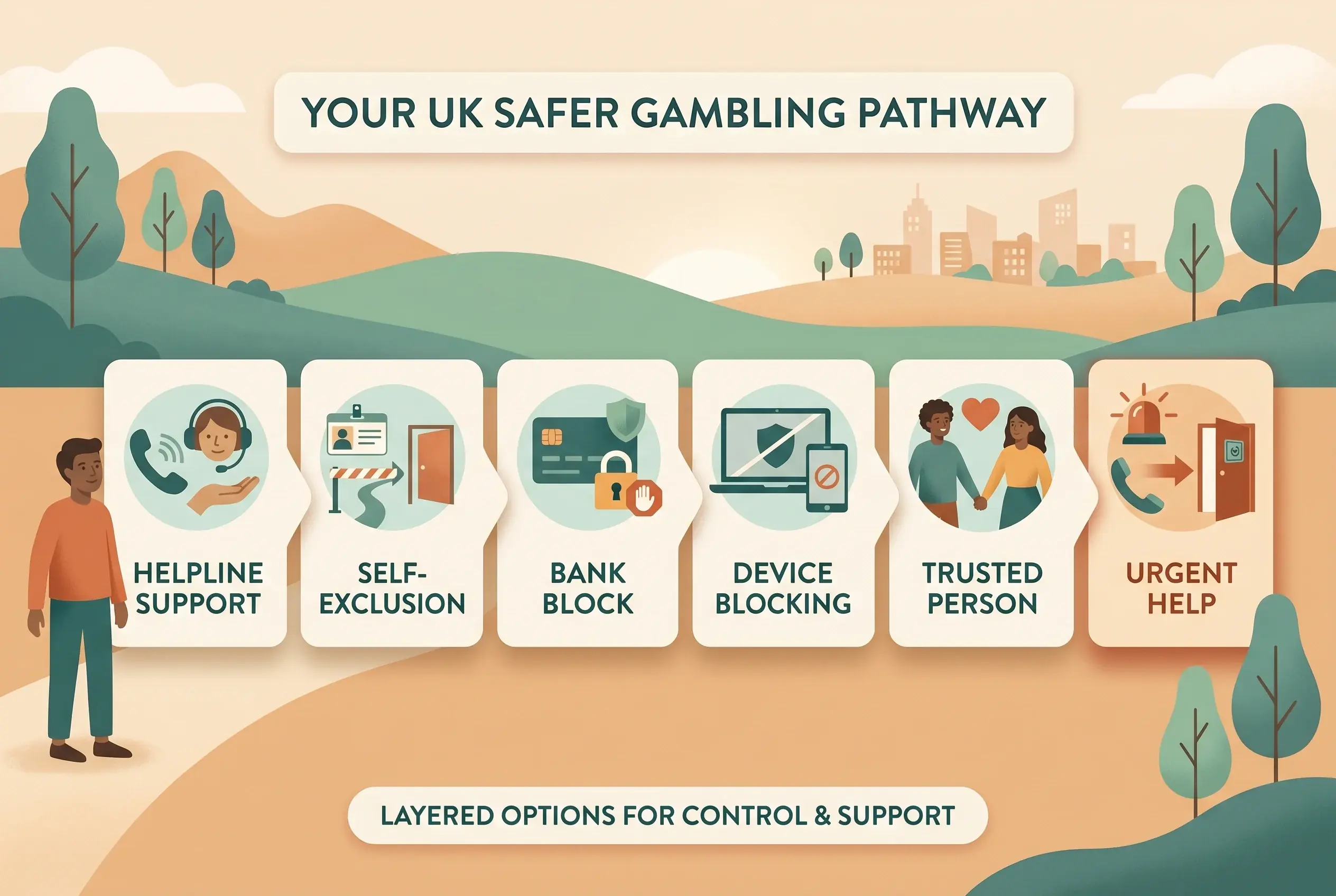
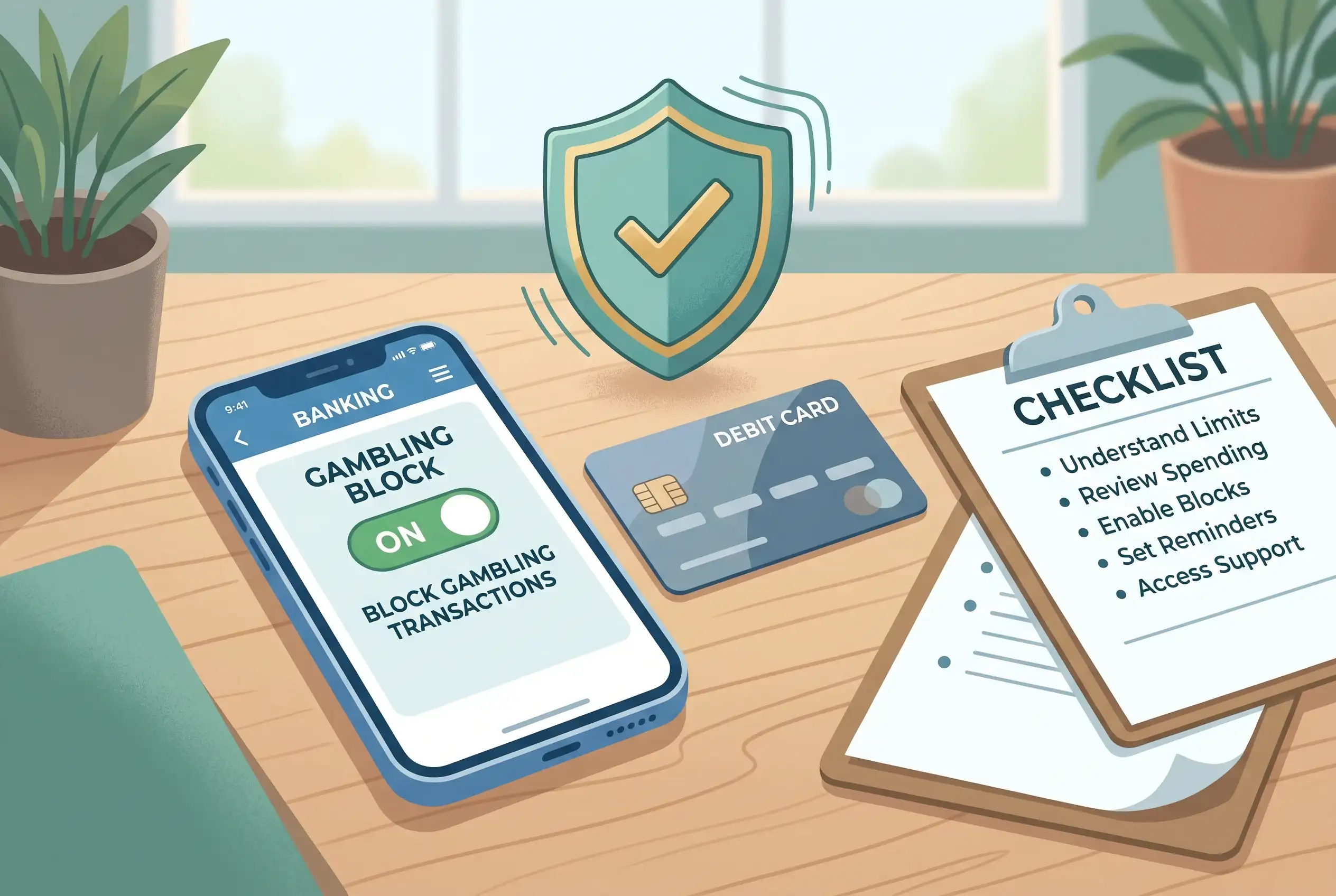
If the reason for continuing is loss chasing, self-exclusion frustration or fear of missing a withdrawal, use a support route before making another payment decision. Identity checks are important, but they should not pull you deeper into gambling when control is already difficult.
If you find yourself constantly chasing losses or struggling with verification stress, it might be time to explore support and control options for gambling.
Your mental and financial well-being should always come first when using any top-rated non-GAMSTOP casino resource.
Questions people often ask
Are ID checks always a bad sign?
No. In a licensed remote setting, identity verification is part of compliance. The warning sign is not the existence of checks; it is unclear timing, unsafe document handling, hidden privacy information or pressure to send more money.
Can a site promise no ID forever?
Treat that claim with caution. Gambling accounts can involve legal and security duties. A promise that checks will never happen may be incomplete or misleading.
What if I made a mistake in my account details?
Correct the issue through the business’s proper support route. Do not use false details, another person’s documents or a second account to work around the mistake.
Should I send documents if I do not trust the site?
Pause first. Check official licence details, privacy information and the secure upload route. If the business remains unclear, keep records and use complaint or reporting guidance instead of sending more information informally.
Created by the "Casino not on Gamstop" editorial team.